Wednesday, September 2, 2026

Editor’s Choice: NASA launches Roman

Plus: A look at the Space Academy
 ‌ ‌ ‌ ‌ ‌ ‌ ‌ ‌ ‌ ‌ ‌ ‌ ‌ ‌ ‌ ‌ ‌ ‌ ‌ ‌ ‌ ‌ ‌ ‌ ‌ ‌ ‌ ‌ ‌ ‌ ‌ ‌ ‌ ‌ ‌ ‌ ‌ ‌ ‌ ‌ ‌ ‌ ‌ ‌ ‌ ‌ ‌ ‌ ‌ ‌ ‌ ‌ ‌ ‌ ‌ ‌ ‌ ‌ ‌ ‌ ‌ ‌ ‌ ‌ ‌ ‌ ‌ ‌ ‌ ‌ ‌ ‌ ‌ ‌ ‌ ‌ ‌ ‌ ‌ ‌ ‌ ‌ ‌ ‌ ‌ ‌ ‌ ‌ ‌ ‌ ‌ ‌ ‌ ‌ ‌ ‌ ‌ ‌ ‌ ‌ ‌ ‌ ‌ ‌ ‌ ‌ ‌ ‌ ‌ ‌ ‌ ‌ ‌ ‌ ‌ ‌ ‌ ‌ ‌ ‌ ‌ ‌ ‌ ‌ ‌ ‌

09/02/2026

READ IN BROWSER

SpaceNews logo
Space News Editor's Choice newsletter logo

Didn't make it to SmallSat this year? Catch up on all the headlines and watch or listen to our conversations with leaders from Frontgrade, Icarus Robotics, Morpheus Space and Innoflight recorded in Salt Lake City last week.

By Dan Robitzski


The Nancy Grace Roman Space Telescope, NASA’s latest flagship astronomy research mission, made it to space.


A Falcon Heavy launched the observatory Aug. 30, beginning its months-long, 1.5 million kilometer journey to the Earth-sun L-2 Lagrange point. Once there, following a course-correction burn or two and instrument deployment, it will begin to collect massive surveys of the sky over the course of a five-year prime mission. Part of this research mission is to scan for exoplanets throughout the galaxy — a particular interest of Roman’s namesake, former NASA astronomy chief Nancy Grace Roman — that are too dimly lit for older observatories to see.


Astronomers also expect roman to help answer fundamental questions about the universe — Roman and its surveys offer a technological leap meant to provide new insight into dark energy and matter.


“We’re about to discover what the universe is made of,” said Lucas Paganini, Roman telescope program executive at NASA Headquarters.


Roman’s surveys, beyond addressing cosmological studies, will provide a wealth of data for astronomers. That includes observations of 20 billion stars in the Milky Way and 2 billion galaxies. Astronomers expect to detect 100,000 exoplanets, about 40 times the number currently known. “Think of this as the largest census we’ve ever done of other planets in our galaxy,” Julie McEnery, Roman telescope senior project scientist, said at an Aug. 29 briefing.


So, hopefully, lots of exciting news and discoveries to come over the coming years. But it was a difficult road to get there. NASA often heralded Roman as proof that it could deliver major milestones early and under budget. However, the mission faced frequent budget challenges.


The White House’s budget proposals for NASA in fiscal years 2019, 2020 and 2021 all proposed canceling the mission, then called WFIRST. The administration’s fiscal year 2026 budget request for NASA also proposed a significant cut for Roman. Congress appropriated full funding for the mission in all four cases.


President Donald Trump called into NASA’s Aug. 30 mission briefing to congratulate the agency, adding that the launch “looked beautiful on television” and asked if there was “anything negative” he needed to know about.


📲  Download the SpaceNews mobile app


SIGNIFICANT DIGIT


80,000 Years

The approximate amount of time it would take a spacecraft that Starcloud’s founders hope to launch on a long journey to Alpha Centauri to reach its destination.

President Trump signs an executive order Aug. 28 creating a commission to study the proposed U.S. Space Academy. Credit: NASA/John Kraus

President Trump signs an executive order Aug. 28 creating a commission to study the proposed U.S. Space Academy. Credit: NASA/John Kraus

SPACE ACADEMY


President Donald Trump signed an executive order Aug. 28 creating a commission to study establishing a federal space academy analogous to those for the military services. The academy would be intended to train the space industry workforce, potentially addressing the talent and hiring problems facing the industry.


In his remarks, Trump suggested that the U.S. Space Academy would be a military academy.


The order makes clear that the proposed academy would be led by NASA but could include service obligations like those of military academies, describing it as “a proposed NASA-led federal academy dedicated to combining rigorous technical education with leadership development, discipline and a durable commitment to public service.”


The administration had not previously discussed plans for a space academy, but NASA Administrator Jared Isaacman has been an advocate for something similar. In his “Project Athena” report prepared during his first nomination to be NASA administrator in early 2025, he proposed a study for a “Starfleet Academy,” a reference to Star Trek.


The executive order has faced mixed feedback. The Aerospace Industries Association immediately endorsed the idea. Meanwhile, Rep. George Whitesides, D-Calif., criticized the idea on social media. He called the proposed space academy “an intriguing idea” but raised several issues about it. Among them is that the commission has no congressional representatives, and that the White House was unclear where the estimated $1 billion annual operational costs would come from.


As Jeff Foust reported:


Trump, in the executive order, noted it was his administration’s policy “to strengthen the nation’s space workforce by expanding opportunities to educate and develop the next generation of leaders across the space domain.”


However, his administration has proposed budgets for NASA in both his first and second terms that would eliminate funding for NASA’s education programs, carried out through its Office of STEM Engagement. Congress has rejected those proposals and continued funding those programs.

Trending This Week


Turkey, a country with a growing space program that includes plans for a lunar mission, has become the 71st nation to sign the Artemis Accords.


An Ariane 6 successfully launched a European weather satellite Aug. 27 on the rocket’s first mission to geostationary orbit.


Chinese commercial launch company Galactic Energy successfully launched its first Pallas-1 rocket late Monday, with future flights to attempt first stage recovery.


A Chinese Long March 6C rocket upper stage has fragmented in orbit, just days after the stage delivered a seven-satellite rideshare mission, according to LeoLabs.


FROM SPACENEWS

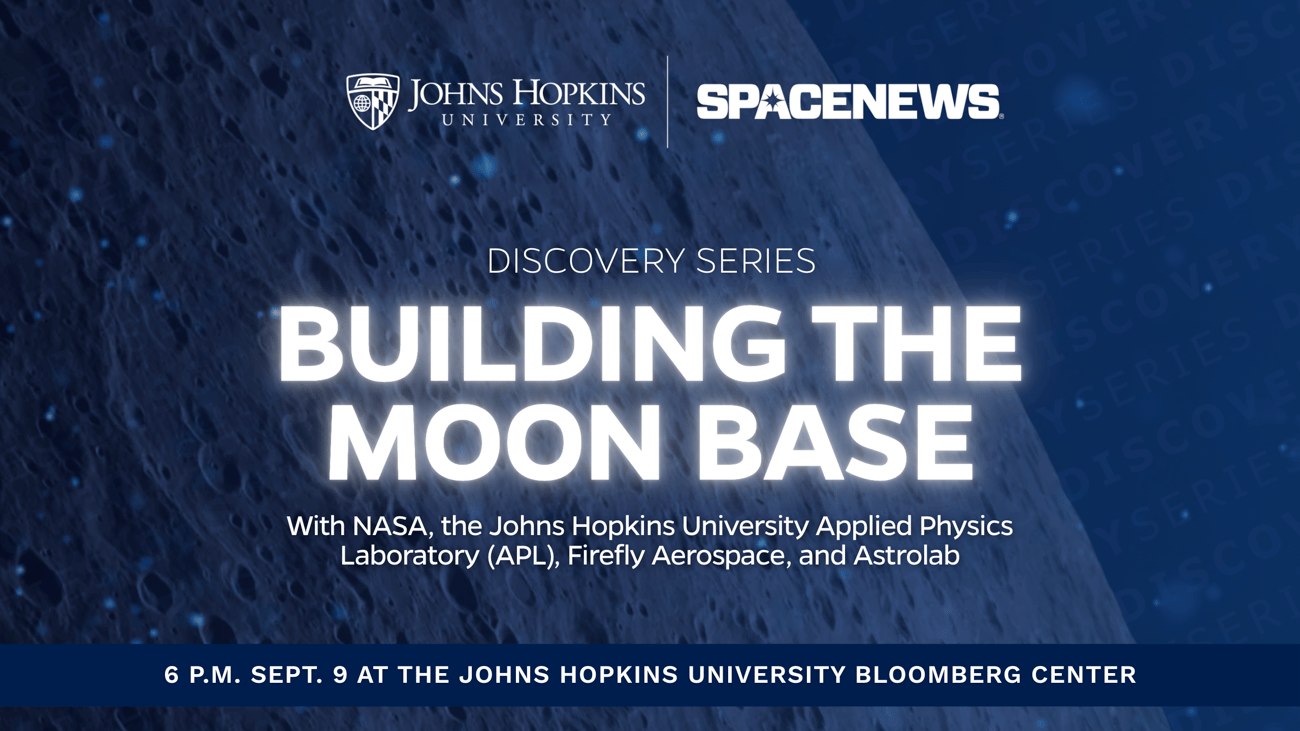
Join us on Sept. 9 for Building the Moon Base in Washington, D.C.

Join us in Washington D.C. on Sept. 9 for our next Discovery Series conversation at the Johns Hopkins Bloomberg Center. This in-person event will explore the latest plans for NASA's Moon to Mars architecture alongside the commercial opportunities, investments, and policies needed to build and support work on the lunar surface for months and eventually years at a time. We'll be joined by leaders from NASA, Firefly Aerospace, Astrolab and the Johns Hopkins University Applied Physics Laboratory. Register now.

Subscribe to SpaceNews


No comments:

Post a Comment

Editor’s Choice: NASA launches Roman

Plus: A look at the Space Academy  ‌ ‌ ‌ ‌ ‌ ‌ ‌ ‌ ‌ ‌ ‌ ‌ ‌ ‌ ‌ ‌ ‌ ‌ ‌ ‌ ‌ ‌ ‌ ‌ ‌ ‌ ‌ ‌ ‌ ‌ ‌ ‌ ‌ ‌ ‌ ‌ ‌ ‌ ‌ ‌ ‌ ‌ ‌ ‌ ‌ ‌ ‌ ‌ ‌ ...