Tuesday, April 29, 2025

Spoofing, jamming and the new messiness of space

View in Browser

04/29/2025

National security insights for space professionals. Delivered Tuesdays.

Welcome to this week's edition of SpaceNews Military Space, your source for the latest developments at the intersection of space and national security.


If this newsletter was forwarded to you, sign up for free here


Space & defense brief ๐Ÿ›ฐ️


Report reveals escalating space threats


Interference with satellite signals is becoming a regular feature of modern conflict, not just a rare glitch.


According to a new report from the Center for Strategic and International Studies (CSIS), GPS jamming and spoofing are now routine across parts of the Middle East, Eastern Europe and Asia, posing growing risks for military and commercial space operators.


The report, released April 25, details how countries such as Russia and Israel have deployed GPS spoofing as part of their military operations in Ukraine and Gaza. Spoofing — sending fake GPS signals to confuse navigation systems — has shifted from a niche tactic to a standard tool of hybrid warfare, disrupting everything from civilian flights to military logistics.


Other key findings:

  • Satellites are flexing: Chinese and Russian spacecraft continue to show off complex maneuvers in orbit, a sign of increasing technical skill with direct implications for surveillance and potential attacks.

  • Blurred lines: Commercial companies supporting governments are increasingly being treated like military targets, especially as defense contracts grow in importance for private space firms.

  • Cyber threats on the rise: Iran, China, and North Korea are ramping up cyberattacks on the space sector, though attribution remains tricky.

CSIS summed it up bluntly: future conflicts are likely to extend into space, and the risks of escalation are rising fast.


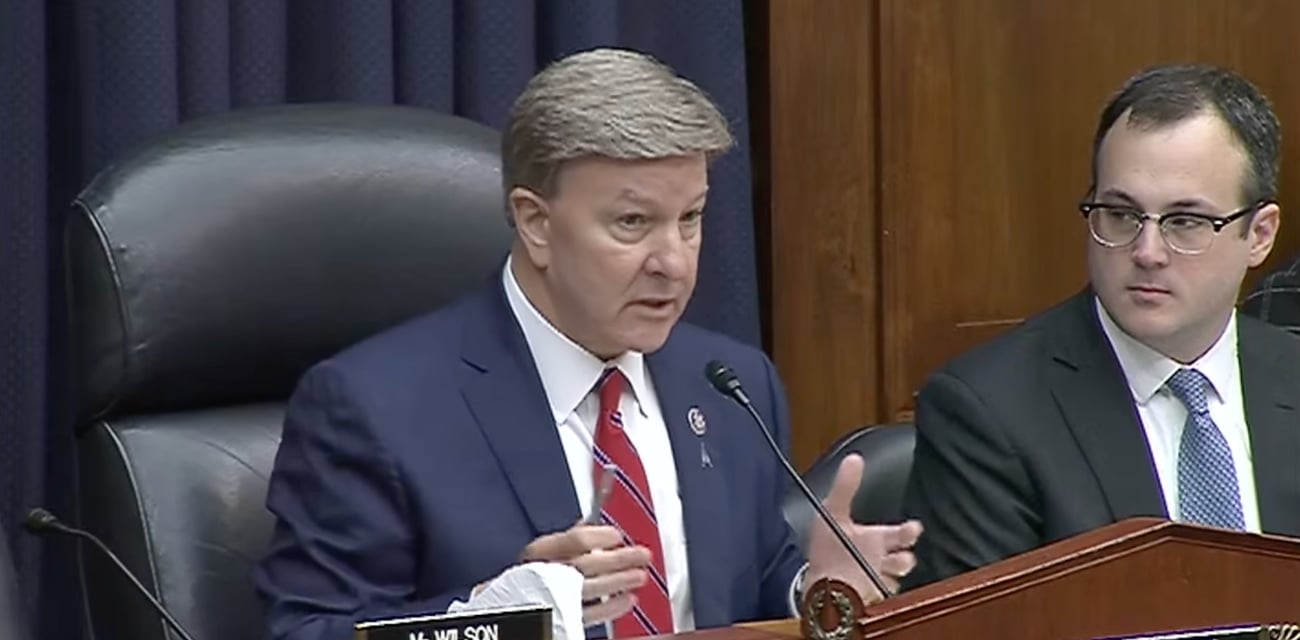
Chairman of the House Armed Services Committee Rep. Mike Rogers (R-Ala.) Credit: HASC livestream


GOP defense spending bill adds billions for space systems


House and Senate Armed Services Committee leaders on Sunday unveiled legislation that would inject an additional $150 billion into Pentagon spending, with a significant portion dedicated to space-based defense systems. 


The proposal would push total defense spending beyond the $1 trillion mark for fiscal year 2025.


Lawmakers recommended $25 billion for the Golden Dome initiative, established through a White House executive order to create a comprehensive shield protecting the United States against ballistic, hypersonic and advanced cruise missiles. Approximately $15 billion of this funding would support space-based assets, including satellites, sensors, interceptors, and launch infrastructure.

  • The space-focused funding includes $2 billion for military satellites with air moving target indicators, $500 million for national security space launch infrastructure, and $7.2 billion to develop, procure, and integrate military space-based sensors. Additional allocations include $5.6 billion for space-based and boost-phase missile interceptors and $300 million for classified military space superiority programs.

  • The funding package is advancing through a budget reconciliation bill to bypass potential Senate filibuster obstacles. The House Armed Services Committee is scheduled to begin markup today. 

  • Democrats are expected to push back on the reconciliation approach. Rep. Adam Smith (D., Wash.), ranking member on the House Armed Services Committee, criticized the legislative strategy as a "partisan budget reconciliation gimmick" that would require offsetting cuts to social safety net programs. 

L3Harris passes key test in Golden Dome satellite program


L3Harris has gained a potential competitive edge in the race to secure contracts for the Trump administration's Golden Dome missile defense initiative after its satellite prototype successfully demonstrated the ability to track hypersonic missiles from space.


The Missile Defense Agency confirmed on Friday that L3Harris' Hypersonic and Ballistic Tracking Space Sensor (HBTSS) satellite met performance targets in recent tests, while a competing prototype from Northrop Grumman failed to satisfy program requirements. Both companies received contracts in January 2021 - $121 million for L3Harris and $155 million for Northrop Grumman - with the satellites launched in February 2024.


The HBTSS technology is considered crucial to the Golden Dome program, which was formalized through executive order to accelerate deployment of space-based sensors capable of tracking hypersonic weapons that maneuver unpredictably in the atmosphere. 


Space Force "RIDE" program to revamp small launch contracting


The U.S. Space Force is modernizing its decade-old launch procurement vehicle with a new initiative called RIDE — Rocket Systems Launch Program (RSLP) Innovative Delivery of Effects. 


The Space Systems Command issued a request for information April 25 seeking private sector input on this next generation of launch service contracts.

  • RIDE will replace several existing programs including Orbital Services Program-4 (OSP-4), Small Rocket Program-Orbital (SRP-O) and Sounding Rocket Program-4 (SRP-4). The program will support launches using both commercial services and surplus ballistic missiles.

  • "Given the variety of launch missions with varying degrees of complexity that RSLP anticipates supporting, the RIDE acquisition strategy may result in one or more contracts," the RFI stated. The government aims to better understand current commercial capabilities for suborbital and small satellite launches, acknowledging that "industry's capability and capacity have changed greatly over the last 10 years."

The program is expected to draw significant interest from emerging small launch providers eager to secure government contracts amid uncertainty in the commercial small satellite launch market.


In other news ๐Ÿš€

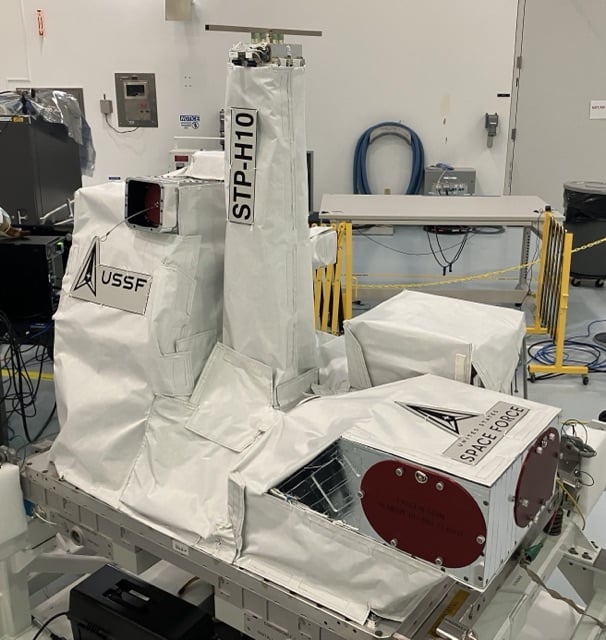
The Space Force teamed with NASA for the launch of the Space Test Program-Houston 10 (STP-H10) mission, which delivered five DoD and one NASA experimental science payloads. These experiments were launched April 21 to the International Space Station (ISS) aboard SpaceX's Commercial Resupply Service (CRS)-32 mission. The experiments traveled inside a Cargo Dragon spacecraft.


The DoD Space Test Program seeks to advance space technology by providing experimental demonstration opportunities and rapid access to space for research and development projects.


On Monday, April 21, 2025, the U.S. Space Force (USSF) Space Systems Command (SSC), in partnership with the National Aeronautics and Space Administration (NASA), successfully launched the Space Test Program-Houston 10 (STP-H10) mission, which delivered five U.S. Department of Defense (DoD) and one NASA experimental science payloads, as a part of a resupply mission to the International Space Station (ISS), aboard SpaceX's Commercial Resupply Service (CRS)-32 mission. (U.S. Space Force photo by DoD Space Test Program)

The U.S. Space Force Weather System Follow-on - Microwave (WSF-M) satellite launched in April 2024 has completed an operational trial period and has been declared ready for initial use. 


The data gathered by WSF-M, made by BAE Systems, will be provided to meteorologists for the generation of weather products used to conduct military mission planning and operations.


"The performance of the first WSF-M satellite during on-orbit evaluations exceeded our expectations," said Col. Daniel Visosky, senior materiel leader at the Space Systems Command.


U.S. Space Force Col. Tim Trimailo is the new director of the Commercial Space Office at the Space Systems Command. The office, known as COMSO, is responsible for the acquisitions of commercial space services such as satellite communications and space domain awareness data. 


Trimailo was previously at the Space Development Agency and at the Defense Advanced Research Projects Agency where he worked on satellite programs.


He replaces Col. Richard Kniseley, who has taken a new position in legislative affairs at the Department of the Air Force.


Thanks for reading!

Please send comments, suggestions and tips to serwin@spacenews.com


Project Kuiper milestone: first 27 satellites launched

Plus: How long can the ISS last?
 ‌ ‌ ‌ ‌ ‌ ‌ ‌ ‌ ‌ ‌ ‌ ‌ ‌ ‌ ‌ ‌ ‌ ‌ ‌ ‌ ‌ ‌ ‌ ‌ ‌ ‌ ‌ ‌ ‌ ‌ ‌ ‌ ‌ ‌ ‌ ‌ ‌ ‌ ‌ ‌ ‌ ‌ ‌ ‌ ‌ ‌ ‌ ‌ ‌ ‌ ‌ ‌ ‌ ‌ ‌ ‌ ‌ ‌ ‌ ‌ ‌ ‌ ‌ ‌ ‌ ‌ ‌ ‌ ‌ ‌ ‌ ‌ ‌ ‌ ‌ ‌ ‌ ‌ ‌ ‌ ‌ ‌ ‌ ‌ ‌ ‌ ‌ ‌ ‌ ‌ ‌ ‌ ‌ ‌ ‌ ‌ ‌ ‌ ‌ ‌ ‌ ‌ ‌ ‌ ‌ ‌ ‌ ‌ ‌ ‌ ‌ ‌ ‌ ‌ ‌ ‌ ‌ ‌ ‌ ‌ ‌ ‌ ‌ ‌ ‌ ‌

View in Browser

A SpaceNews daily newsletter

04/29/2025

Top Stories

The first operational satellites for Amazon's Project Kuiper broadband constellation are in orbit after a launch Monday night. An Atlas 5 lifted off from Cape Canaveral at 7:01 p.m. Eastern and placed 27 Kuiper satellites into orbit. Amazon confirmed several hours later that the satellites were functioning. The satellites are the first in a constellation of 3,236 spacecraft Amazon plans to deploy to provide global broadband services. That deployment is running behind schedule, making it likely that Amazon will request an extension of an FCC deadline to have half the constellation in orbit by July 2026. Amazon is relying primarily on new rockets — Ariane 6, New Glenn and Vulcan — to launch most of those satellites, and those vehicles have suffered delays entering commercial service. [SpaceNews]


Satellite manufacturer Apex has raised $200 million. The company announced Tuesday a Series C round led by Point72 Ventures and co-led by 8VC, with several existing and new investors also participating. Apex, which raised $95 million in a Series B round last year, said it will use the new funding to increase vertical integration and other measures to accelerate production of its satellite buses. The company says it is seeing strong demand, particularly for national security applications, but has not disclosed how many satellites it has sold. [SpaceNews]


Satellite operator Spire Global has closed the $241 million sale of its commercial maritime tracking business after a legal dispute. Spire announced last November it would sell the unit to Belgian analytics provider Kpler, but filed suit in February to compel Kpler to complete the deal. Spire said it used proceeds from the sale to pay off its roughly $100 million in outstanding debt, reserving the rest for growth initiatives across other lines of business. [SpaceNews]


A veteran NASA astronaut said the International Space Station can operate well past 2030. At a press conference Monday, Don Pettit, who just completed his third long-duration mission to the station, described the ISS as "a well-oiled machine" operating at peak efficiency. He said he thought the station could operate well past 2030 provided NASA continued to invest in refurbishment, comparing the station to B-52 bombers that continue to fly more than 60 years after they were built. Pettit, who turned 70 years old as he returned to Earth earlier this month, said he would like to go to space again. [SpaceNews]


China is exploring the development of its first overseas launch site with a proposed equatorial spaceport in Malaysia. The China Great Wall Industry Corporation signed a letter of intent with two Malaysian entities earlier this month to perform a one-year feasibility study for a proposed spaceport in the Malaysian state of Pahang, just north of the Equator. If the project goes forward, it could ease bottlenecks in existing Chinese launch sites and enhance relations between China and Malaysia. [SpaceNews]


Other News

China launched a third set of satellites for its Guowang constellation Monday. A Long March 5B heavy lift rocket with a Yuanzheng-2 upper stage lifted off at 4:10 p.m. Eastern from the Wenchang Satellite Launch Center. The Shanghai Academy of Spaceflight Technology said the launch of the Guowang satellites was a success but did not disclose any additional details. A mission patch with 10 stars on it suggests the rocket carried 10 satellites. An estimated 29 Guowang satellites are now in orbit for a constellation intended to have as many as 13,000 satellites. [SpaceNews]


SpaceX launched two sets of Starlink satellites on opposite coasts Monday. One Falcon 9 lifted off from Vandenberg Space Force Base in California at 4:42 p.m. Eastern and put 27 Starlink satellites into orbit. A second Falcon 9 lifted off at 10:34 p.m. Eastern from the Kennedy Space Center in Florida, putting 23 Starlink satellites in orbit. The Florida launch involved the rare flight of a new Falcon 9 booster, while the California launch used a booster on its 25th flight. [Spaceflight Now]


Chinese astronauts are getting an extra day in space. Chinese officials said they postponed the scheduled return Tuesday of the Shenzhou-19 spacecraft from the Tiangong space station, citing poor weather conditions at the Inner Mongolia landing site. The landing will instead take place no earlier than Wednesday. The spacecraft will return three Chinese astronauts who spent the last six months on Tiangong. [Xinhua]


The Texas legislature has blocked a bill that would have given SpaceX more authority over beach closing at its Starbase site. A committee of the Texas House of Representatives voted against the bill Monday, keeping it from going to the full House. The bill would have given SpaceX, and not Cameron County, more authority to close the single road leading to both the Starbase test site and Boca Chica Beach for launches and other test activities. Some local residents opposed the bill, arguing it gave SpaceX too much control over beach access. [San Antonio Express-News]


A wayward Soviet-era spacecraft, intended to go to Venus, will instead soon reenter the Earth's atmosphere. Cosmos 482 was launched in 1972 on a mission to Venus, but a failure of its rocket's upper stage instead stranded the spacecraft in low Earth orbit. That orbit has been gradually decaying and the spacecraft is now expected to reenter around May 9 or 10. The spacecraft includes a descent probe designed to enter the atmosphere of Venus, and thus would likely survive an Earth reentry. [Space.com]


Gravity Weighs on You


"A week ago, I was on station. I was doing really heavy squats. I was doing deadlifts. I could float around with the greatest of ease even though I had no trapeze. I was right at the peak of my game. And then you come back to Earth and it's like, 'God, I can't even get up from the floor anymore.'"


– NASA astronaut Don Pettit, describing at a press conference Monday his readjustment to gravity after seven months on the International Space Station.


What's New With SpaceNews?

Don't forget to sign up for our next webinar!

Webinar registration

Join us May 6 as we sit down with Novaspace to dig into their in-depth analysis of SpaceX's financial health, strategic evolution and key business segments.

Manage Preferences


Monday, April 28, 2025

A $25B budget push for Golden Dome

Plus: The head of the FAA's commercial space transportation office is leaving
 ‌ ‌ ‌ ‌ ‌ ‌ ‌ ‌ ‌ ‌ ‌ ‌ ‌ ‌ ‌ ‌ ‌ ‌ ‌ ‌ ‌ ‌ ‌ ‌ ‌ ‌ ‌ ‌ ‌ ‌ ‌ ‌ ‌ ‌ ‌ ‌ ‌ ‌ ‌ ‌ ‌ ‌ ‌ ‌ ‌ ‌ ‌ ‌ ‌ ‌ ‌ ‌ ‌ ‌ ‌ ‌ ‌ ‌ ‌ ‌ ‌ ‌ ‌ ‌ ‌ ‌ ‌ ‌ ‌ ‌ ‌ ‌ ‌ ‌ ‌ ‌ ‌ ‌ ‌ ‌ ‌ ‌ ‌ ‌ ‌ ‌ ‌ ‌ ‌ ‌ ‌ ‌ ‌ ‌ ‌ ‌ ‌ ‌ ‌ ‌ ‌ ‌ ‌ ‌ ‌ ‌ ‌ ‌ ‌ ‌ ‌ ‌ ‌ ‌ ‌ ‌ ‌ ‌ ‌ ‌ ‌ ‌ ‌ ‌ ‌ ‌

View in Browser

A SpaceNews daily newsletter

04/28/2025

Top Stories

The Golden Dome missile defense program would receive $25 billion as part of a defense bill. The funding is part of $150 billion in additional defense spending for fiscal year 2025 that the leadership of the House and Senate Armed Services Committees have proposed adding to a budget reconciliation bill. The $25 billion earmarked for Golden Dome includes about $15 billion for satellites, sensors, launch infrastructure and interceptors. Democrats oppose the plan, citing the legislative strategy and potential impacts on social programs. [SpaceNews]


A test of a missile-tracking satellite may give L3Harris an edge in Golden Dome contracts. The Missile Defense Agency confirmed Friday that L3Harris' Hypersonic and Ballistic Tracking Space Sensor (HBTSS) satellite prototype met performance targets in tests. MDA launched two competing HBTSS demonstration satellites in February 2024, one built by L3Harris and another by Northrop Grumman, but only the L3Harris satellite has satisfied program requirements. HBTSS is seen as a cornerstone technology in the Golden Dome program by providing tracking information to guide interceptors to hypersonic missiles. [SpaceNews]


A new study finds that GPS interference has become routine in conflicts around the world. The "Space Threat Assessment" report by the Center for Strategic and International Studies, released Friday, identifies Russia and Israel as primary actors in widespread GPS spoofing campaigns tied to ongoing military operations in Ukraine and Gaza. The report identified several other worrying trends, including Russia's alleged development of space-based nuclear anti-satellite systems and increased cyberthreats to space systems, concluding that space is becoming "a more dangerous place," increasingly intertwined with both peacetime and wartime strategies. [SpaceNews]


The head of the FAA's commercial space transportation office is leaving. The FAA confirmed that Kelvin Coleman, the FAA's associate administrator for commercial space transportation, is among those who opted in to a second round of the agency's Deferred Resignation Program, which allows personnel to leave the agency and continue to be paid through the end of the fiscal year. Coleman led the office, which licenses commercial launches and reentries, since 2022 and previously was deputy associate administrator. [SpaceNews]


Astrotech won a Space Force contract to increase payload processing capacity at Vandenberg Space Force Base. The $77.5 million contract announced Friday is part of a public-private partnership for cost-sharing of expanded facilties for payload processing at the spaceport. Astrotech currently has 40,000 square feet of payload processing facilities at Vandenberg. Space Force officials have identified satellite processing facilities as a significant bottleneck in recent years. [SpaceNews]


The nominee to be Secretary of the Air Force has acknowledged that Elon Musk sat in on his interview with President Trump. Troy Meink said in written responses to questions from the Senate Armed Services Committee that Musk was "one of many people" present at the interview, but that only Trump asked questions. Musk's presence at the interview, though, has raised conflict of interest issues given SpaceX's role as a defense contractor. Jared Isaacman, nominee to be NASA administrator, has repeatedly declined to answer questions about whether Musk was present in his own interview with Trump. [Politico]

Other News

China launched a data relay satellite Sunday. A Long March 3B lifted off at 11:54 a.m. Eastern from the Xichang Satellite Launch Center, placing into geostationary transfer orbit the Tianlian-2 (05) data tracking and relay communications satellite. The satellite will provide data relay and telemetry, tracking and command services for crewed spacecraft and the Tiangong space station as well as other spacecraft in low and medium Earth orbits. [SpaceNews]


SpaceX launched a set of Starlink satellites Sunday night. A Falcon 9 lifted off from Cape Canaveral at 10:09 p.m. Eastern and placed 23 Starlink satellites into orbit. The launch was the 250th by SpaceX dedicated to deployment of Starlink satellites. [UPI]
 
Two American universities are among those receiving lunar samples from China's Chang'e-5 mission. The China National Space Administration (CNSA) announced last week that seven universities in six countries would receive samples returned by Chang'e-5, China's first lunar sample return mission, in 2020. The recipients include Brown University and Stony Brook University in the United States. NASA allowed American universities to apply for the samples despite limitations on bilateral cooperation with China through the Wolf Amendment. [SpaceNews]


Axiom Space has promoted one of its executives to CEO. The company announced Friday that Tejpaul Bhatia, its chief revenue officer, would become CEO. Bhatia joined Axiom in 2021 and secured more than $1 billion in contracts for the company, which is working on a commercial space station and other space infrastructure. Kam Ghaffarian, co-founder and executive chairman, had been serving as acting CEO since last August, when Michael Suffredini stepped down as CEO and joined the company's board. [SpaceNews]


A Russian military satellite the United States claimed is a test of a space-based nuclear anti-satellite weapon appears to be tumbling. Commercial space situational awareness companies LeoLabs and Slingshot Aerospace said their observations indicate Cosmos 2553 is tumbling, suggesting that the spacecraft is inoperable. The spacecraft launched in 2022 into a 2,000-kilometer orbit, and U.S. officials said last year that they believe the satellite is linked to Russian efforts to develop nuclear weapons that would disable satellites, adding that the satellite itself does not have a nuclear device. The companies said Cosmos 2553 started tumbling last year. [Reuters] 


Canadian launch startup Reaction Dynamics won a $1 million investment from a reality show. The company won the investment through the "Meet the Drapers" show starring longtime venture capitalist Tim Draper. Reaction Dynamics says the funding will be part of a $5 million round it is raising to advance its development of hybrid propulsion systems for use on suborbital and orbital vehicles. [SpaceQ]


The Week Ahead


Monday:

  • Vandenberg Space Force Base, Calif.: Rescheduled launch of a Firefly Alpha rocket carrying a Lockheed Martin technology demonstration satellite at 9:37 a.m. Eastern.
  • Washington: The FCC holds its April open commission meeting at 10:30 a.m. Eastern to consider several items, including a notice of proposed rulemaking on satellite spectrum sharing.

  • Wenchang, China: Projected launch of a Long March 5B carrying broadband satellites at 4:05 p.m. Eastern.
  • Vandenberg Space Force Base, Calif.: Scheduled launch of a Falcon 9 carrying Starlink satellites at 4:39 p.m. Eastern.
  • Cape Canaveral, Fla.: Rescheduled launch of an Atlas 5 rocket carrying the first operational set of Amazon Project Kuiper satellites at 7 p.m. Eastern.
  • Kennedy Space Center, Fla.: Scheduled launch of a Falcon 9 carrying Starlink satellites at 9:51 p.m. Eastern.

Monday-Wednesday:

Tuesday:

  • Inner Mongolia, China: Anticipated landing of the Shenzhou-19 spacecraft after a six-month mission to the Tiangong space station at about 2:04 a.m. Eastern.
  • Kourou, French Guiana: Scheduled launch of a Vega rocket carrying ESA's Biomass spacecraft at 5:15 a.m. Eastern.
  • Washington: The House Science Committee holds a markup session for several bills, including three space-related ones, at 10 a.m. Eastern.

  • Online: NOAA's Science Advisory Board meets to discuss NOAA science activities starting at 12:30 p.m. Eastern.

  • Online: The Mitchell Institute's Schriever Spacepower Series holds a webinar on military communications and PNT at 1 p.m. Eastern.

Wednesday:

  • Washington: The Senate Commerce Committee holds an executive session at 10 a.m. Eastern to consider the nomination of Jared Isaacman to be NASA administrator and several space-related bills, among other nominations and bills.

  • Washington: The 2025 AIAA Awards Gala honors the organizations fellows and awardees, including AIAA Goddard Astronautics Award winner Jeff Bezos.
  • Cape Canaveral, Fla.: Scheduled launch of a Falcon 9 carrying Starlink satellites at 10:17 p.m. Eastern.

Wednesday-Thursday:

Thursday:

  • International Space Station: NASA astronauts Anne McClain and Nichole Ayers will perform a spacewalk outside the station starting at 8 a.m. Eastern to move a communications antenna and mount a solar array bracket.
  • Washington: The Senate Armed Services Committee holds a confirmation hearing for Matthew L. Lohmeier, nominated to be undersecretary of the Air Force, at 9:30 a.m. Eastern.

  • Vandenberg Space Force Base, Calif.: Scheduled launch of a Falcon 9 carrying Starlink satellites at 2:40 p.m. Eastern.


What's New With SpaceNews?

Don't forget to sign up for our next webinar!

Webinar registration

Join us May 6 as we sit down with Novaspace to dig into their in-depth analysis of SpaceX's financial health, strategic evolution and key business segments.

Manage Preferences


Top Stories: A Russian military satellite approached an Iceye spacecraft

Plus: JAXA launched a Phobos sample return mission  ‌ ‌ ‌ ‌ ‌ ‌ ‌ ‌ ‌ ‌ ‌ ‌ ‌ ‌ ‌ ‌ ‌ ‌ ‌ ‌ ‌ ‌ ‌ ‌ ‌ ‌ ‌ ‌ ‌ ‌ ‌ ‌ ‌ ‌ ‌ ‌ ‌ ‌ ‌ ‌...