Tuesday, September 22, 2026

Military Space: A multibillion-dollar push to watch GEO


Plus: Redesigning the space acquisition machinery
 ‌ ‌ ‌ ‌ ‌ ‌ ‌ ‌ ‌ ‌ ‌ ‌ ‌ ‌ ‌ ‌ ‌ ‌ ‌ ‌ ‌ ‌ ‌ ‌ ‌ ‌ ‌ ‌ ‌ ‌ ‌ ‌ ‌ ‌ ‌ ‌ ‌ ‌ ‌ ‌ ‌ ‌ ‌ ‌ ‌ ‌ ‌ ‌ ‌ ‌ ‌ ‌ ‌ ‌ ‌ ‌ ‌ ‌ ‌ ‌ ‌ ‌ ‌ ‌ ‌ ‌ ‌ ‌ ‌ ‌ ‌ ‌ ‌ ‌ ‌ ‌ ‌ ‌ ‌ ‌ ‌ ‌ ‌ ‌ ‌ ‌ ‌ ‌ ‌ ‌ ‌ ‌ ‌ ‌ ‌ ‌ ‌ ‌ ‌ ‌ ‌ ‌ ‌ ‌ ‌ ‌ ‌ ‌ ‌ ‌ ‌ ‌ ‌ ‌ ‌ ‌ ‌ ‌ ‌ ‌ ‌ ‌ ‌ ‌ ‌ ‌

09/22/2026

READ IN BROWSER

SpaceNews logo
Military Space newsletter logo

Subscribe now and read anywhere with the SpaceNews app: Unlimited reporting and analysis – plus the monthly digital magazine – from $25/month. Get access now.

By Sandra Erwin


Welcome to SpaceNews' Military Space, your source for the latest developments at the intersection of space and national security. In this week's edition: Why the Space Force is building a new set of eyes on GEO. Plus, a look at new efforts to institutionalize technology transition.


If someone forwarded you this edition, sign up to receive it in your inbox every Tuesday. We welcome your feedback and suggestions. You can hit reply or DM me on Signal @SandraErwin.43.

📲  Download the new SpaceNews mobile app


The Defense Innovation Unit selected satellite designs from Northrop Grumman (right) and True Anomaly for the Geosynchronous High-Resolution Optical Space-Based Tactical Reconnaissance program, known as GHOST-R. That program seeks satellites capable of providing detailed space-to-space imagery and maintaining custody of friendly and adversarial spacecraft in geosynchronous Earth orbit. Credit: True Anomaly, Northrop Grumman

Redesigning the space acquisition machinery 


Commercial space technology has advanced faster than the Pentagon machinery built to buy it. The Space Force is now trying to close that gap by changing how new capabilities make their way into operational programs.


“We’re no longer operating a traditional acquisition system; we are building a warfighting acquisition system,” Erich Hernandez-Baquero, the Air Force's assistant secretary for space acquisition and integration, said as the department announced a new Space Technology Portfolio Executive.


The commercial space sector has drawn billions in private capital, but the military has struggled to create pathways for moving new technologies from demonstrations into operational programs and sustained procurement.


The Space Force’s newly established portfolio acquisition executives, or PAEs, are expected to help solve this problem.


Hernandez-Baquero told reporters at the Air & Space Forces Association conference that PAEs are allowed to make trades within their mission areas and bring in commercial technology when it provides a credible military benefit.


The latest addition to the PAE structure, a technology portfolio executive, will be tasked with identifying promising technologies from commercial companies and government research programs and using prototypes to mature them until a PAE can pull them into an operational portfolio.


Col. Tim Trimailo, who leads the command's Commercial Space Office, described his organization not simply as an industry outreach office but as part of a pipeline that can move companies from initial engagement through SpaceWERX investment, operational prototyping through the Space Enterprise Consortium and, for mature capabilities, into standing contracts such as the Commercial Augmentation Space Reserve.


Trimailo told reporters at AFA that his office convenes a quarterly group called the Commercial Innovation and Investments Team, bringing together organizations including SpaceWERX, the Defense Innovation Unit, the Air Force Research Laboratory and DARPA to compare commercial investments and projects around particular mission areas. 


A recent meeting focused on positioning, navigation and timing and potential commercial contributions to a more resilient GPS architecture.


Satellite communications


The office responsible for buying commercial satcom services has been brought under the same portfolio executive that oversees military systems. Acting portfolio acquisition executive Erin Carper said the structure gives the Space Force a better view of how commercially leased services and government-owned constellations fit together.


The Space Force is taking a similar approach as it begins planning the next generation of GPS. Officials are starting with market research into what industry can provide before settling on the architecture and acquisition strategy for GPS Gen 4. An industry day this month is intended in part to examine “commercial first” technologies that could be incorporated into the future ground system.


There are still obstacles. Trimailo noted that buying data and other contractor-owned, contractor-operated services remains a challenge for the government. 


Commercial companies have different business incentives and other customers to serve, requiring acquisition strategies that differ from those used with traditional defense contractors. Integrating those services into military architectures also requires testing and exercises before operators can depend on them.


Officials speaking at AFA agreed the issue is not finding commercial innovation but absorbing it into military architectures and recurring procurement. 


Why Space Force is building a new set of eyes on GEO


Some of the Space Force’s most significant new investments in space surveillance are taking shape about 22,000 miles above Earth, where the service is preparing to replace a small number of specialized government satellites with larger constellations intended to keep much closer watch on activity around geosynchronous orbit.


The buildup centers on two complementary programs: RG-XX and SG-XX.


One is being designed for reconnaissance, using maneuverable satellites to approach and closely observe spacecraft of interest. SG-XX is intended to provide a wider view, continuously scanning the GEO belt, finding objects and maintaining track of them so the reconnaissance satellites can be directed toward targets that warrant a closer look.


The numbers show how seriously the service is taking the problem. The fiscal 2027 budget request includes $355 million for RG-XX and projects nearly $2.8 billion for the program through fiscal 2031. SG-XX would receive $370 million in 2027, with about $1.7 billion projected over the same five-year period. 


The Space Force also expanded the ceiling on its GEO surveillance-focused Andromeda contracting vehicle from $1.8 billion to more than $6.2 billion after officials said the budget had grown to address an “escalating threat environment” expected around 2030 and beyond. 


Why GEO? The orbital belt is becoming a more dynamic operating environment as China and other countries field spacecraft capable of maneuvering, approaching and inspecting other satellites. The Pentagon’s concern is detecting a spacecraft and then keeping track of it as it moves and determine what it is doing. 


In support of the RG-XX program, the Defense Innovation Unit selected Northrop Grumman and True Anomaly to build prototype satellites capable of taking high-resolution images of other spacecraft in GEO and maintaining custody of them. This gives the Space Force a way to test designs before committing them to the larger program.


SG-XX is taking a networked approach. Space Systems Command is considering arranging the satellites in a “string of pearls” above the GEO belt, with radio-frequency links allowing surveillance information to move from satellite to satellite. 


Officials say connectivity to move information across GEO quickly is critical for military operations.


Surveillance needed for warfighting


The new surveillance capacity is being planned as U.S. Space Command is demanding more advanced space domain awareness.


Gen. Stephen Whiting, the head of Space Command, told the AMOS conference in Maui last week that the military has enough space domain awareness for current operations but needs more precise tracking and much better integration to support combat in space.


“Targeting in the space domain is maturing, but it still has a long way to go,” Whiting said. “We don’t have robust target folders like the Joint Force does in other domains.”


The Space Force now draws observations from hundreds of government and commercial sensors, but commercial and allied data still run alongside the military’s core space domain awareness systems rather than feeding directly into them. 


“We must be able to reach across all of these vertical program offices to make sure they deliver as an intact kill chain,” Whiting said. He said one of the biggest near-term improvements would simply be to fund commercial data purchases consistently and get those observations directly into military programs of record.


More commercial data 


The Space Force’s Joint Commercial Operations Cell, or JCO, was created in 2020 to bring commercial observations into U.S. Space Command’s space domain wareness mission. It now buys electro-optical, radar and other commercial data from a market that has grown rapidly since then. 


A Government Accountability Office report last month found JCO spent $76.8 million through the Global Data Marketplace from January 2023 through September 2025, supporting missions including space domain awareness, positioning and navigation monitoring and tactical surveillance, reconnaissance and tracking. 


Barbara Golf, who leads the organization, said at AMOS that JCO has turned a demonstration for detecting GPS interference into a standing global operation and is expanding into other portions of the electromagnetic spectrum. 


During U.S. military operations against Iran, U.S. Central Command asked the cell to move beyond GPS and use commercial satellites to help locate interference affecting a much wider range of military frequencies. The Space Force now wants to extend that capability to all six geographic combatant commands.


Golf said electromagnetic-spectrum monitoring could ultimately become “by far the biggest part of the JCO.”


SpaceNews' latest national security coverage


FROM SPACENEWS

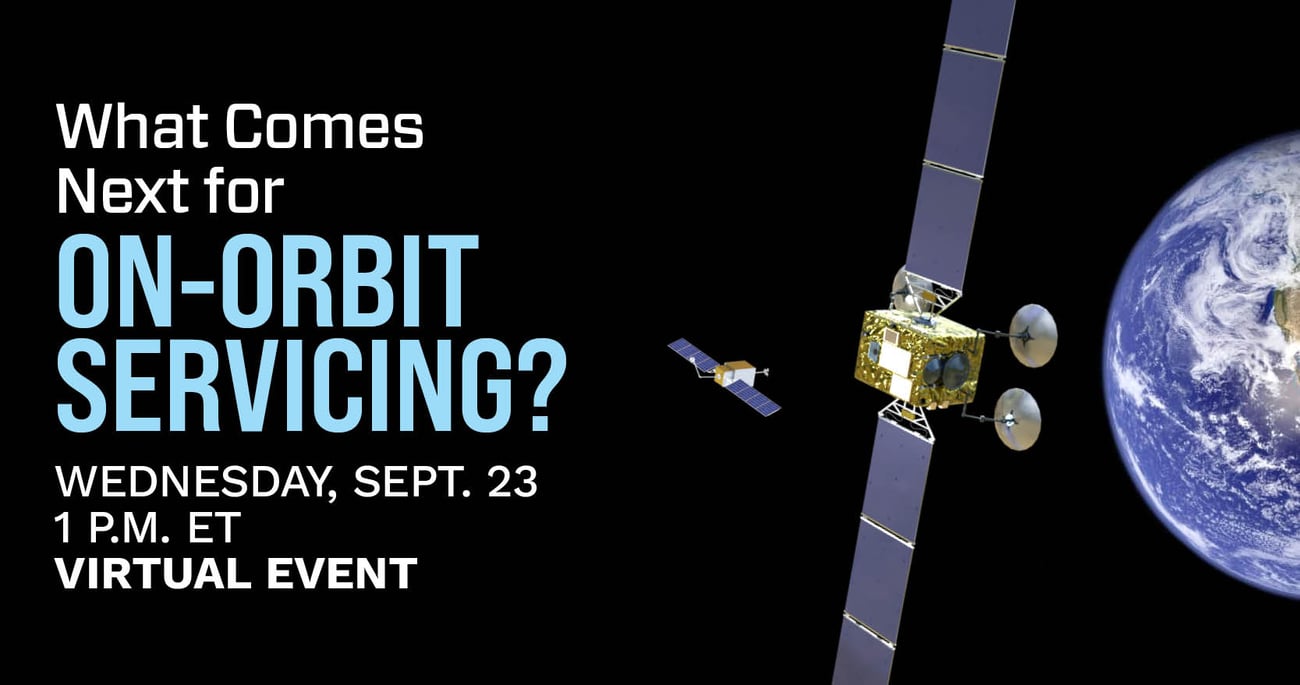
What Comes Next for On-Orbit Servicing? Join us on Wednesday, Sept. 23 for conversations about the tech, policies and business models required to build a functioning in-orbit logistics ecosystem. Col. Scott Carstetter, director of servicing, mobility, and logistics at Space Systems Command, and other experts will explore what comes next for the technologies, policies and business models required to build a functioning in-orbit logistics ecosystem. Register now.

Subscribe to SpaceNews


No comments:

Post a Comment

Military Space: A multibillion-dollar push to watch GEO

Plus: Redesigning the space acquisition machinery  ‌ ‌ ‌ ‌ ‌ ‌ ‌ ‌ ‌ ‌ ‌ ‌ ‌ ‌ ‌ ‌ ‌ ‌ ‌ ‌ ‌ ‌ ‌ ‌ ‌ ‌ ‌ ‌ ‌ ‌ ‌ ‌ ‌ ‌ ‌ ‌ ‌ ‌ ‌ ‌ ...