Tuesday, September 1, 2026

Military Space: Golden Dome tests a new acquisition playbook


Plus: Colorado's space sector expansion amid Space Command relocation
 ‌ ‌ ‌ ‌ ‌ ‌ ‌ ‌ ‌ ‌ ‌ ‌ ‌ ‌ ‌ ‌ ‌ ‌ ‌ ‌ ‌ ‌ ‌ ‌ ‌ ‌ ‌ ‌ ‌ ‌ ‌ ‌ ‌ ‌ ‌ ‌ ‌ ‌ ‌ ‌ ‌ ‌ ‌ ‌ ‌ ‌ ‌ ‌ ‌ ‌ ‌ ‌ ‌ ‌ ‌ ‌ ‌ ‌ ‌ ‌ ‌ ‌ ‌ ‌ ‌ ‌ ‌ ‌ ‌ ‌ ‌ ‌ ‌ ‌ ‌ ‌ ‌ ‌ ‌ ‌ ‌ ‌ ‌ ‌ ‌ ‌ ‌ ‌ ‌ ‌ ‌ ‌ ‌ ‌ ‌ ‌ ‌ ‌ ‌ ‌ ‌ ‌ ‌ ‌ ‌ ‌ ‌ ‌ ‌ ‌ ‌ ‌ ‌ ‌ ‌ ‌ ‌ ‌ ‌ ‌ ‌ ‌ ‌ ‌ ‌ ‌

09/01/2026

READ IN BROWSER

SpaceNews logo
Military Space newsletter logo

Didn't make it to SmallSat this year? Catch up on all the headlines and watch or listen to our conversations with leaders from Frontgrade, Icarus Robotics, Morpheus Space and Innoflight recorded in Salt Lake City last week.

SPONSORED BY

By Sandra Erwin


Welcome to SpaceNews' Military Space, your source for the latest developments at the intersection of space and national security. In this week's edition: Golden Dome tests a new playbook for working with industry, Space Force fast-tracks acquisition hires and Colorado touts Space Force expansion amid Space Command relocation.


If someone forwarded you this edition, sign up to receive it in your inbox every Tuesday. We welcome your feedback and suggestions. You can hit reply or DM me on Signal @SandraErwin.43.

📲  Download the new SpaceNews mobile app


President Donald Trump signed an executive order Aug. 28 creating a presidential commission to design a new United States Space Academy, a proposed NASA-led federal academy intended to train future military, civil and technical space personnel. The order gives the commission 120 days to recommend how the academy should be structured, where it should be located, what degrees and training it should offer and what service obligations graduates should incur. Credit: NASA/ John Kraus

Golden Dome tests new playbook for working with industry


The Pentagon is sharpening its message to industry on Golden Dome: Bring us technology that works, be prepared to put some of your own capital at risk and don’t wait for the government to write a traditional requirement before showing up.


That was the takeaway from Army Lt. Gen. Brian Gibson, Golden Dome’s deputy director, at last week’s AFCEA Intelligence & National Security Summit. His comments built on Gen. Michael Guetlein’s recent campaign to portray the homeland missile defense effort not just as a massive weapons program, but as an experiment in how the Pentagon buys and integrates technology.


Officials insist that Golden Dome isn’t being built from scratch. Much of the architecture will connect missile-warning satellites, radars, interceptors and other capabilities already managed by the Missile Defense Agency and military services, while adding new technologies such as space-based sensors and potentially space-based interceptors. The objective, as he put it, is to build a “better brain” that can integrate old and new systems.


Bringing in new tech


Golden Dome has conducted two live-fire exercises at different locations over the past eight months, and Gibson said the Pentagon allowed industry partners to bring technologies that weren’t part of established programs of record into the test venues “We want to learn where failure is so we can build to success,” he said.


The industry outreach is happening on another front as well. The Pentagon this month opened the Golden Dome Ecosystem Hub, a digital portal intended to give potential suppliers a direct route into the program. Gibson said the portal has already attracted thousands of submissions.


His message to contractors:“Tell us what you can do, without us going to ask what you can do.” 


But there’s a catch


Moving faster could also shift more risk to companies. Gibson said the new approach “involves risk to your shareholders” and “risk inside of your company lines.” He urged contractors to become more flexible about how they develop technology for the government.


That echoes Guetlein’s push for prize-style competitions and greater private investment, particularly in the competition for space-based interceptors. Gibson stressed that companies that want into Golden Dome have to accept more development and financial risk without the certainty of a conventional Pentagon program waiting at the other end.


Enter Gravitics


One new entrant illustrates how the expanding Golden Dome ecosystem is reaching beyond the usual missile defense players.


Seattle-area space startup Gravitics has been selected by Lockheed Martin Space to build three spacecraft known as Orbital Carriers for space-based missile defense, according to securities filings connected to the startup’s planned public listing.


Gravitics didn’t start as a missile defense company. Founded in 2021, it initially focused on large modules and infrastructure for commercial space stations. It has since been adapting that technology for national security missions, including through a Space Force STRATFI effort.


Orbital Carriers are designed to carry other spacecraft, sensors or payloads and release them when needed. Gravitics has pitched the concept as a way to pre-position assets in orbit.


This is one example of the industrial model Golden Dome officials say they want: established defense companies working alongside newer commercial space suppliers. Whether that model survives the transition from prototypes to large-scale procurement is the bigger question. For space companies eyeing what could become one of the military’s largest new markets, the opportunity could be substantial. So could the risk.


SPONSORED

Terran Orbital is advancing space through innovation, delivering mission-ready satellite solutions built for the demands of today’s most critical missions. From design and manufacturing to integration and operations, our vertically integrated capabilities enable speed, flexibility, and performance across a wide range of mission requirements. Backed by decades of spaceflight heritage and proven expertise, we are pushing satellite technology forward while helping government and defense customers move from concept to orbit with confidence. Whether the mission calls for responsive development, scalable production, or highly configurable platforms, Terran Orbital is ready to deliver. Discover our platforms and advance your next mission.

As Space Command departs, Colorado says its space economy still growing


Colorado is losing U.S. Space Command to Alabama, but state and local leaders are increasingly pointing to a different set of numbers to argue that Colorado’s military space sector is still headed up.


Nearly a year after President Donald Trump ordered Space Command’s headquarters moved from Peterson Space Force Base to Redstone Arsenal in Huntsville, the relocation is becoming tangible. The command moved its first operational intelligence personnel to Alabama in April and expects about 200 personnel to make the move this year. 


Space Command’s relocation is expected to shift roughly 1,400 positions from Colorado Springs to Alabama over several years.


U.S. Space Command is the military’s joint combatant command for space operations, while the Space Force is the service responsible for organizing, training and equipping space forces.


The Colorado response has been to stop fighting the basing decision and to put more emphasis on what is staying and what is coming next.


At the center of that pitch is the Space Force’s new Infrastructure Portfolio Acquisition Executive, which is being headquartered at Peterson.


Rep. Jeff Crank (R-Colo.) and Colorado Springs business leaders have promoted the office as a major acquisition win for the region, saying it grew out of an organization with a roughly $4 billion portfolio and gives Colorado Springs a bigger role in deciding how the service buys test, training and other infrastructure capabilities. 


Crank has also highlighted a planned $250 million Space Force operations facility at Schriever Space Force Base and future Space Force personnel growth in the region. 


The Space Force says the infrastructure PAE is projected to become a 300-person organization executing a $500 million annual budget.


State economic-development officials count more than 2,000 aerospace businesses employing more than 55,000 people directly, with another 184,000 jobs indirectly tied to the industry. Colorado says aerospace employment grew more than 26 percent over five years and that companies headquartered in the state captured more than $23 billion in federal contracts in a recent fiscal year. 


Manufacturing is becoming an increasingly important piece of the story. Astro Digital selected Colorado for an expansion expected to create 141 jobs as it ramps up production of larger satellites. The company cited the state’s aerospace talent pool as a factor in its decision. 


This month, Colorado-based Ursa Major opened a Longmont manufacturing facility for avionics and in-space propulsion systems with room for more than 125 employees, while freeing up manufacturing capacity at its Berthoud headquarters for engines, vehicle integration and solid rocket motors. 


Safran Defense & Space has just completed a satellite thruster production line in Parker, with U.S.-made thrusters expected to begin shipping in 2027. 


Colorado still hosts a large share of the Space Force’s uniformed personnel, major operational units, national security space contractors and a dense engineering workforce. Air Force Secretary Troy Meink said in May that nearly half of uniformed Guardians are based in Colorado, calling the state a “vital anchor” for the service.


In short, Huntsville is gaining the permanent headquarters of a unified combatant command and the people, infrastructure and long-term spending that come with it. Meanwhile, Colorado is betting that Space Force operations, acquisition and an increasingly hardware heavy commercial and defense industrial base can keep its space economy growing.


Space Force fast-tracking acquisition hires


The Space Force is testing a new way to get civilian acquisition workers ready for the job faster, an effort that lands just as its new acquisition chief takes office with a mandate to rebuild the workforce responsible for managing an expanding portfolio.


Space Systems Command launched a Civilian Guardian Jumpstart program with an inaugural class of 15 newly hired acquisition program managers. The course is designed to give entry-level civilian employees an accelerated introduction to the Space Force, SSC and the military space acquisition system before they move into their program offices. It supplements existing onboarding and a 10-week acquisition qualification course.


This initiative gets under way as Erich “HB” Hernandez-Baquero takes over as the second assistant secretary of the Air Force for space acquisition and integration. The Air Force says his priorities include carrying out acquisition reforms, delivering more integrated capabilities and “revitalizing the acquisition workforce.” 


The workforce piece is particularly important as the Space Force tries to turn a major increase in funding into fielded systems while simultaneously changing how it buys them. The service has reorganized acquisition around nine Portfolio Acquisition Executives with greater responsibility for broad mission areas, putting a premium on program managers who understand not only individual programs but how satellites, ground systems, software and networks fit together.


The Jumpstart program is small, but it targets a basic constraint on acquisition reform: giving officials more authority to move quickly does little good without enough trained people to exercise it.


SSC plans eventually to expand Jumpstart beyond program managers to acquisition interns in contracting, cyber, engineering, financial management and logistics, giving new civilian hires a common introduction to the Space Force and defense acquisition. 


SpaceNews' latest national security coverage


FROM SPACENEWS

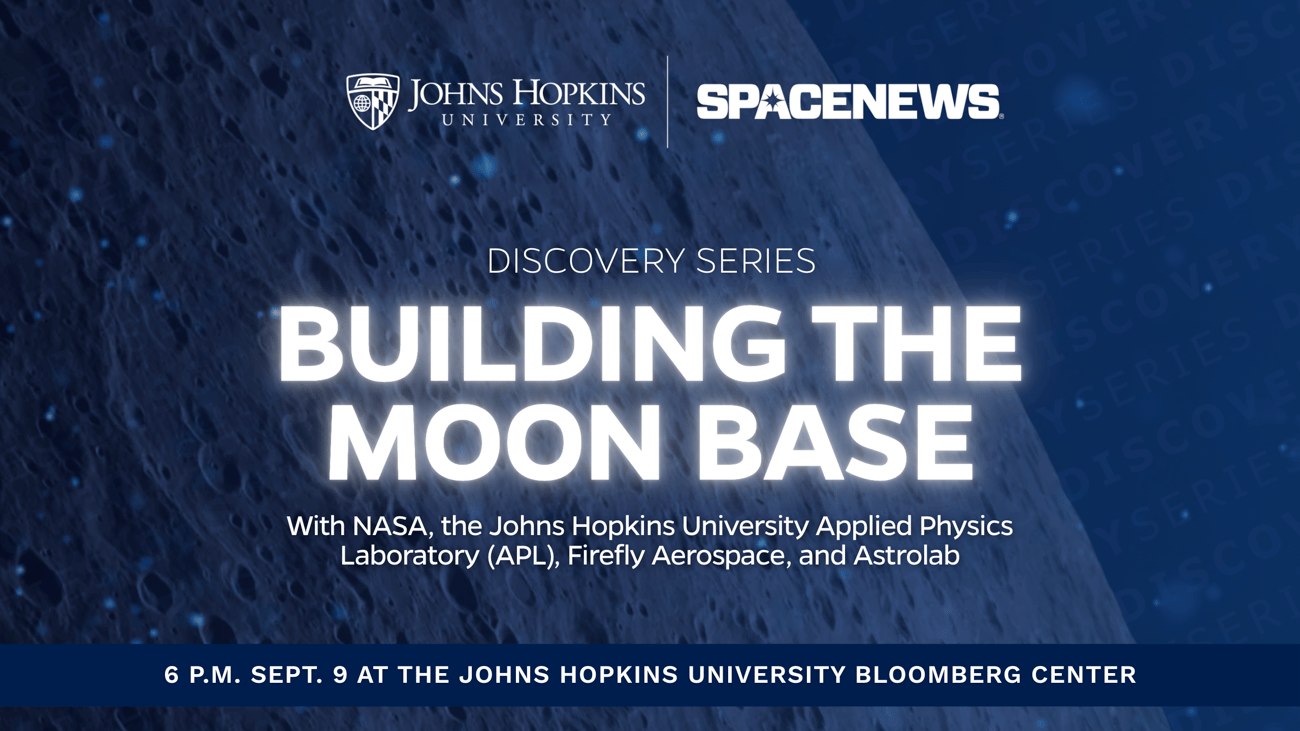
Join us on Sept. 9 for Building the Moon Base in Washington, D.C.

Join us in Washington D.C. on Sept. 9 for our next Discovery Series conversation at the Johns Hopkins Bloomberg Center. This in-person event will explore the latest plans for NASA's Moon to Mars architecture alongside the commercial opportunities, investments, and policies needed to build and support work on the lunar surface for months and eventually years at a time. We'll be joined by leaders from NASA, Firefly Aerospace, Astrolab and the Johns Hopkins University Applied Physics Laboratory. Register now.

Subscribe to SpaceNews


No comments:

Post a Comment

NASA adjusts the Artemis spacesuit requirements

Plus: The final O3b mPower satellites are ready to launch  ‌ ‌ ‌ ‌ ‌ ‌ ‌ ‌ ‌ ‌ ‌ ‌ ‌ ‌ ‌ ‌ ‌ ‌ ‌ ‌ ‌ ‌ ‌ ‌ ‌ ‌ ‌ ‌ ‌ ‌ ‌ ‌ ‌ ‌ ‌ ‌ ‌ ...