Plus: Intelligence on space industry unicorns
By Dan Robitzski
This week, SpaceNews reporters are covering news from around the world, with two distinct themes.
Some of our team has been in Paris at the annual World Space Business Week, the International Space Summit and the Space Defense and Security Summit. The theme there has been Europe’s push for more practical sovereignty when it comes to space but also its continent-spanning commercial economy.
SpaceNews’ Jeff Foust reported that European officials at the International Space Summit took opportunities to call for greater European autonomy. One example: Ursula von der Leyen, president of the European Commission, talked about how the Galileo satellite navigation system provides capabilities “too important to depend on others.”
Jeff also wrote a story on Project Bromo, a significant merger that advocates say would create a “European champion” for space. Executives from the companies spoke at World Space Business Week to argue that Project Bromo would allow the European sector broadly to scale at a faster rate.
Then there are the mission updates and tech demonstrations. Debra Werner covered the Australian company HEO’s news that it had repurposed an Earth observation satellite to approach and inspect a Chinese rocket in orbit.
Meanwhile, in the United States, Sandra Erwin has been reporting from the Air Force Association’s Air, Space & Cyber conference in Maryland, where new Space Force and Air Force leadership have been making speeches and announcements to emphasize the role of space as a warfighting enabler but also a warfighting domain.
Sandra reported that U.S. Air Force Secretary Troy Meink “revealed that the United States has deployed space-control weapons in orbit.” What exactly does that mean? AFA President Burt Field asked, and Meink referred back to his carefully phrased statement.
Meanwhile, newly appointed Space Force chief, Gen. Douglas Schiess shared anecdotes about the Space Force’s role in combat in the war on Iran, positioning the military branch as warfighters rather than service providers.
|
|
|
|
FROM SPACENEWS |
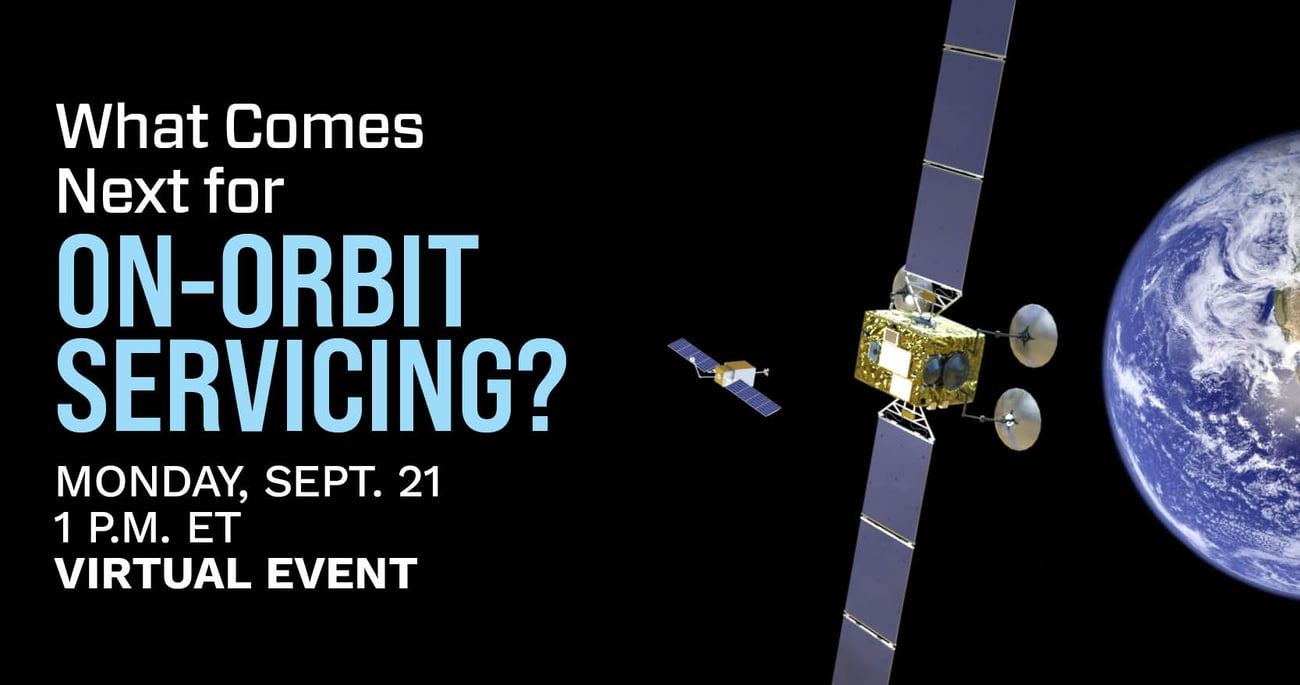 |
What Comes Next for On-Orbit Servicing? Join us on Monday, Sept. 21 for conversations about the tech, policies and business models required to build a functioning in-orbit logistics ecosystem. Col. Scott Carstetter, director of servicing, mobility, and logistics at Space Systems Command, and other experts will explore what comes next for the technologies, policies and business models required to build a functioning in-orbit logistics ecosystem. Register now. |
|
|
|
|
SIGNIFICANT DIGIT
|
$302 million
|
The amount ten U.S. allies have agreed to pay to cover launch, ground-system upgrades and operations for the U.S. Space Force’s next Wideband Global SATCOM satellite.
|
|
|
|
|
SPACE UNICORNS
|
Last week, SpaceNews Intelligence launched its latest report, “Space’s Growing Billion Dollar Club.” Inside, you’ll find data and profiles of the private companies that have been named to the space unicorn club, meaning those with a valuation worth more than $1 billion.
The report includes key players, valuation and funding round information for each company as well as a narrative about their company history and a key takeaway from our team. It’s a must-download to understand where the space industry is headed and who the next big players may be.
SpaceNews’ Jason Rainbow, who wrote much of the report, shared some thoughts about what’s driving the space economy now.
Multiple drivers are adding gasoline to the maturation of the space economy, helping it attract broader and deeper pools of capital from more institutional players that can make these kinds of bets.
One of the big ones is growing recognition worldwide of just how strategic it is to access and operate in space. Growing government demand is fueling a lot of interest in “dual-use” technologies that promise to build sovereign capabilities while also serving commercial customers.
Of course, SpaceX’s blockbuster IPO this summer has also done much to galvanize investor excitement across the sector, particularly for emerging markets like orbital data centers that promise to be its next major growth area.
What’s one company we’ve written about that’s surprised you and why?
The Exploration Company raised $450 million last week to help develop its cargo spacecraft in one of the largest Series C funding rounds for a European space company, shaking off multiple setbacks even as an initial test flight to the ISS remains years away.
Perhaps not too surprising given Europe’s push for a sovereign space transportation capability, but the startup’s CEO told reporters more than 95% of its investors are European, despite clear appetite in the U.S. for large space bets.
Download the full report here. You’ll want to keep it handy.
|
|
|
|
|
|
|
|
|
|
Open Cosmos has raised 300 million euros ($348 million) to expand production facilities and upgrade its space-based intelligence and connectivity services. The Series C financing valued the company at more than $1 billion. |
|
|
A Vega C rocket successfully launched a pair of Earth observation satellites for the European Space Agency and the European Commission on Sept. 14.
|
|
|
|
|
|
FROM SPACENEWS |
 |
Where do space investors see the biggest opportunities? SpaceNews has mapped the ranks of private space firms valued at $1 billion or more, capturing 37 companies working in launch and satellite broadband, Earth observation, space stations, orbital data centers and other promising markets. Drawing on public disclosures, original reporting and other sources, each profile tracks when and how a company achieved unicorn status and its latest known valuation, alongside funding-round breakdowns and total capital raised from BryceTech’s Startup Space database. Download the report. |
|
|
|
|








No comments:
Post a Comment