Plus: The new moon race is too dangerous
| By Dan Robitzski
Welcome back to our weekly newsletter highlighting the opinions and perspectives of the SpaceNews community.
| | | | | | |
Last month, the White House released a new executive order on space policy, and one sentence in particular has caused an uproar in the space community: no longer is the United States government required to provide space situational awareness data and space traffic management service for free. Our latest commentary on the matter comes from Audrey Schaffer, the senior vice president of global policy and government strategy at Slingshot Aerospace who had a 15-plus-year tenure as a civil servant focused on space policy.
Schaffer wrote that it's high time spacecraft operators start pitching in rather than benefitting from services paid exclusively through tax dollars. And while government services shouldn't be disassembled overnight, she argued that "continuing to leverage this infrastructure to provide free space traffic coordination services to any operator will become increasingly untenable as the number of satellites grows exponentially."
"Wholly disestablishing a U.S. government civil space traffic coordination system just as TraCSS becomes operational is unwise, but making operators contribute to funding space safety services is smart and fiscally responsible policy," Schaffer wrote.
You can read the rest of her argument here. | | | | |
Is NASA rushing a return to the moon before solving the critical technological and human safety risks involved in establishing a long-term presence there — something the United States government is particularly interested in doing before China?
Science writer and journalist Dennis Meredith argues that the answer is a resounding yes. In his recent opinion article, Meredith laid out a long list of logistical challenges and health risks that NASA has identified but not yet solved. As Meredith wrote, he "hope[s] that the tenure of Jared Isaacman will bring an energized NASA and produce the wise long-term planning and sufficient funding needed to tackle them."
On the list of these "red risks" are health issues such as the effects of cosmic radiation, degraded vision, cognitive decline and deficient food and nutrition, as well as logistical challenges such as dealing with lunar dust (which, Meredith wrote, can causes health issues in its own right), and establishing proper infrastructure on the moon to support landing, launch and habitation.
You can see the rest of the article here. | | | | | |  | | Illustration representing NASA's moon-to-Mars ambitions. Credit: NASA
| | | | SpaceNews is committed to publishing our community's diverse perspectives. Whether you're an academic, executive, engineer or even just a concerned citizen of the cosmos, send your arguments and viewpoints to opinion (at) spacenews.com to be considered for publication online or in our next magazine. If you have something to submit, read some of our recent opinion articles and our submission guidelines to get a sense of what we're looking for. The perspectives shared in these opinion articles are solely those of the authors and do not necessarily represent their employers or professional affiliations. | | | | | | | FROM SPACENEWS | 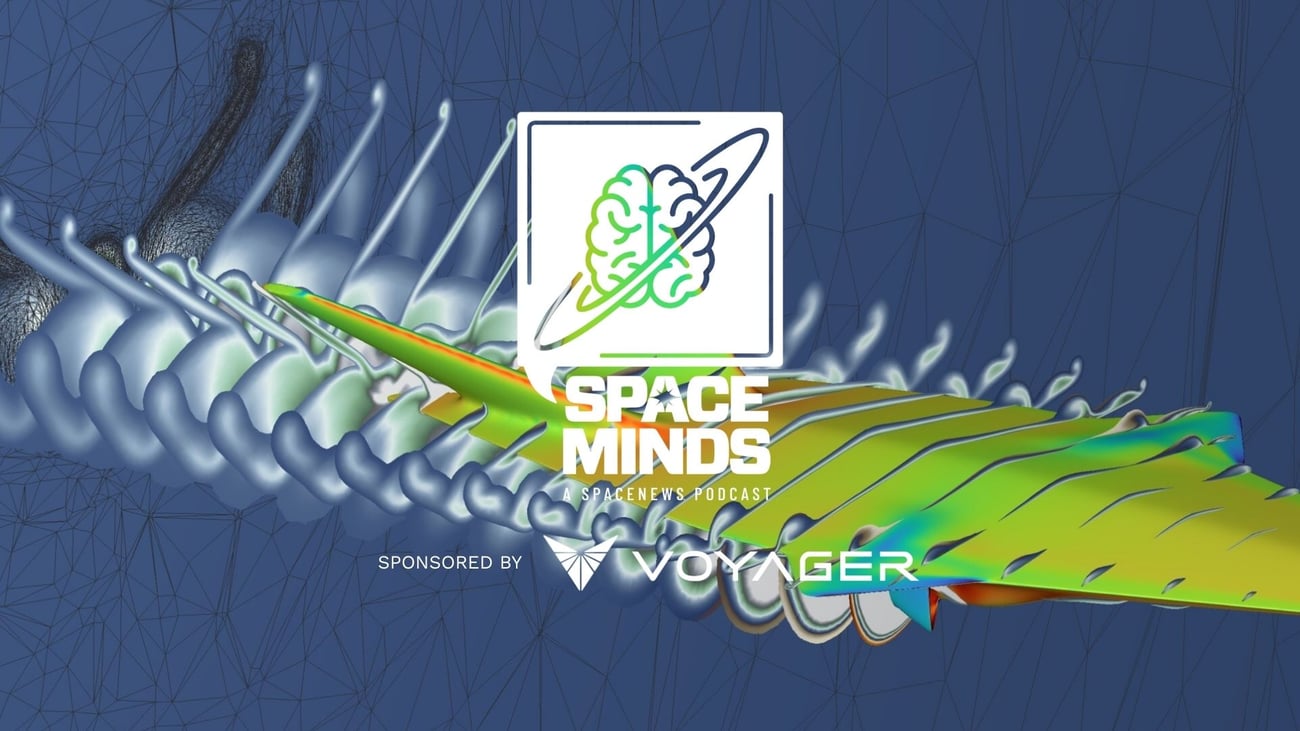 | | How physics AI is transforming the future of space engineering: On this episode of Space Minds, host David Ariosto speaks with Juan Alonso — CTO and co-founder of Luminary Cloud and professor at Stanford University — about the rapid transformation underway in aerospace engineering. Alonso breaks down how advances in computational fluid dynamics and Physics AI are enabling designers to simulate complex aerodynamic behavior in seconds, dramatically accelerating how rockets, aircraft and hypersonic systems are conceived and tested. Watch and listen to this episode. | | | | |









No comments:
Post a Comment