Plus: Array Labs raises $20 million in Series A
| By Jeff Foust
In this today's edition: Congress rejects proposed steep budget cuts at NASA, Array Labs raises money for low-cost SAR satellites, astronomers are on Cloud Nine with a new Hubble discovery and more.
If someone forwarded you this edition, sign up to receive it directly in your inbox every weekday. Have thoughts or feedback? You can hit reply to let me know directly.
| | | | | | Top Stories
A final fiscal year 2026 spending bill released by appropriators Monday largely rejects proposed steep budget cuts at NASA. House and Senate appropriators released the text of a "minibus" spending bill that combines three bills, including the commerce, justice and science legislation that funds NASA. The minibus provides $24.438 billion for NASA, slightly less than the $24.875 billion NASA received in 2025 but well above the White House's proposal of $18.8 billion. The bill restores nearly all the funding for science, which faced a nearly 50% cut, although it provides no money for the Mars Sample Return program, instead directing NASA to support related technologies. The bill also restores some of the funding cut for space technology and reinstates the STEM Engagement education account, which the proposal sought to cancel. The House is expected to take up the bill later this week, followed by the Senate. [SpaceNews]
Radar-imaging satellite startup Array Labs has raised $20 million. The company announced the Series A funding Monday led by Catapult Ventures with participation from several other new and existing investors. The company is betting that radar hardware long treated as bespoke and expensive can be produced at scale using manufacturing techniques drawn from consumer electronics and telecommunications. Array Labs plans to launch clusters of small satellites that fly in coordinated formations and image the same area from multiple angles, allowing it to create 3-D images of terrain. It launched two demonstration satellites in 2024 to validate its distributed radar concept and plans a second demonstration mission in 2026. [SpaceNews]
Chinese astronauts are going underground to prepare for missions to the moon. A team of 28 astronauts participated in the month-long training program held in a mountainous area of Chongqing municipality in the country's southwest, with teams spending six days at a time in caves. The intensive training was designed to align closely to real mission requirements and expand China's astronaut training system, while testing astronauts' abilities to cope with extreme environments. The Chinese program was modeled on ESA's Cooperative Adventure for Valuing and Exercising human behavior and performance Skills (CAVES) program, which also trained astronauts for future missions in caves. [SpaceNews]
The first orbital test flight of India's Gaganyaan spacecraft is now expected in March. The uncrewed mission will test the Gaganyaan spacecraft's performance in low Earth orbit and its ability to safely reenter and splashdown. The test flight is the first of several before a crewed mission, now expected no earlier than 2027. The Gaganyaan program has suffered significant delays, having missed its original goal of launching humans into orbit by 2022. [Indian Express]
| | | | | | Other News
The former head of England's Spaceport Cornwall is now working for a Canadian spaceport. Maritime Launch Services (MLS) said Monday that Melissa Quinn has joined the company as vice president of spaceport operations. Quinn is formerly head of Spaceport Cornwall, an English airport that hosted a Virgin Orbit LauncherOne mission in 2023. MLS, which is developing a vertical launch site called Spaceport Nova Scotia, said Quinn will help prepare the spaceport to move into operations, hosting small launch vehicles. Quinn is being loaned to MLS by MDA Space, which she recently joined as a senior director of corporate development. MDA invested in MLS last year. [MLS]
The Turkish government has started construction of a spaceport in Somalia. A government minister announced last week that design work for the spaceport was completed and the first phase of construction had started. The government did not disclose what the first phase of development entailed or when the spaceport would be completed. Turkey does not have orbital launch vehicles of its own but the government stated that establishing a spaceport would help enable development of such vehicles. [Hurriyet]
NASA and SpaceX have successfully tested the ability of the Dragon spacecraft to reboost the station's orbit. The CRS-33 cargo Dragon spacecraft has performed four orbit-raising maneuvers to date, most recently last week, with one more planned for mid-January before the spacecraft departs the station. The reboosts have shown Dragon can raise the station's orbit, a task usually performed by Progress cargo spacecraft or the station's own thrusters. [NASA]
A new discovery by the Hubble Space Telescope has put astronomers on Cloud Nine. Astronomers announced Monday that they had discovered a cloud of gas and dark matter on the outskirts of a nearby spiral galaxy, M94. The object is about 4,900 light-years across and weighs about five billion solar masses, dominated by dark matter. Astronomers believe the object, designated Cloud-9 since it is the ninth gas cloud found in this survey, is the remnant of a failed galaxy, with Hubble images confirming it contains no stars. [NASA]
| | | | | FROM SPACENEWS | 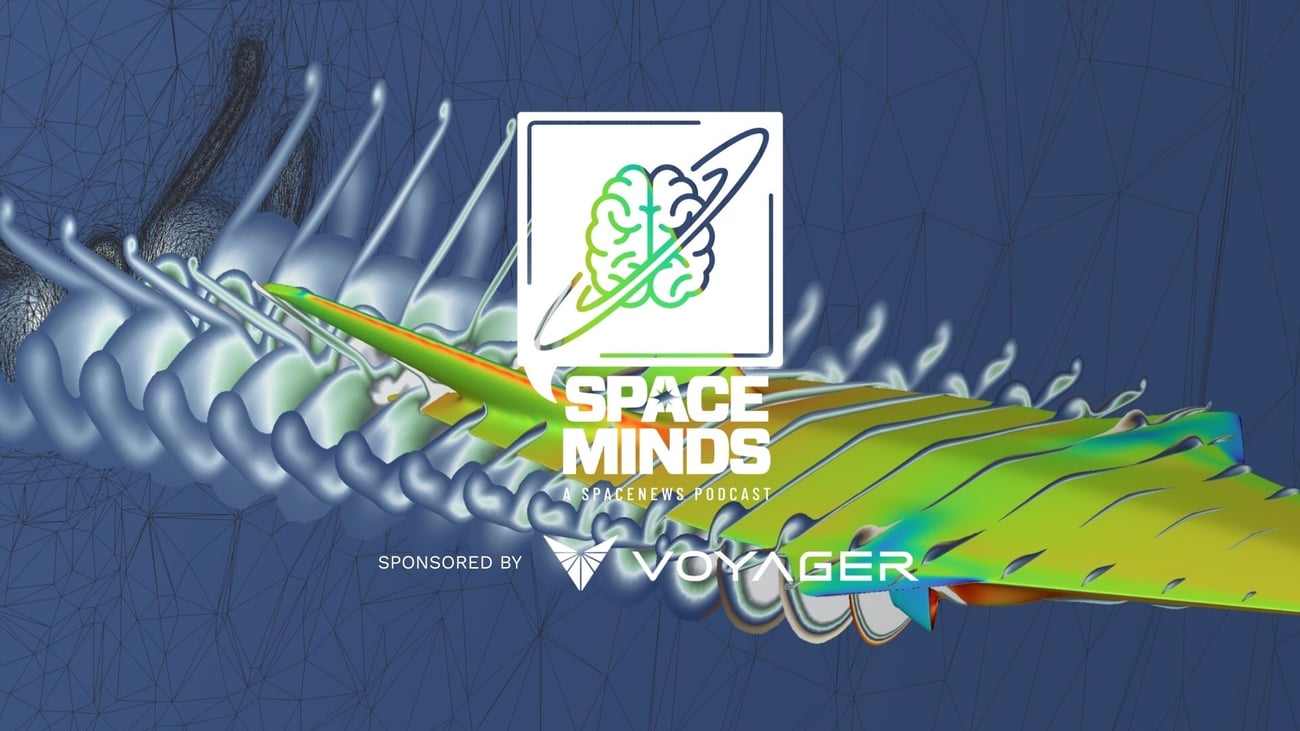 | | How physics AI is transforming the future of space engineering: On this episode of Space Minds, host David Ariosto speaks with Juan Alonso — CTO and co-founder of Luminary Cloud and professor at Stanford University — about the rapid transformation underway in aerospace engineering. Alonso breaks down how advances in computational fluid dynamics and Physics AI are enabling designers to simulate complex aerodynamic behavior in seconds, dramatically accelerating how rockets, aircraft and hypersonic systems are conceived and tested. Watch and listen to this episode. | | | | | | Comm Check
| "One two, one two. Every word from an astronaut starts with a comm check."
| | – ESA astronaut Sophie Adenot, testing her microphone at the start of a press conference Monday about her upcoming mission to the ISS.
| | | | | | |









No comments:
Post a Comment