Plus: SkiFi adds Vantor imagery
| By Jeff Foust
In today's edition: NASA ramps up work on a large space telescope, SkyFi adds Vantor imagery, PSLV prepares to return to flight and more.
If someone forwarded you this edition, sign up to receive it directly in your inbox every weekday. Have thoughts or feedback? You can hit reply to let me know directly.
| | | | | | Top Stories
NASA is seeking to accelerate work on a large space telescope. The agency announced Monday it awarded contracts to seven companies to work on key technologies for the Habitable World Observatory (HWO), a space telescope with a mirror up to eight meters across currently planned for launch in the 2040s. The companies will work on technologies related to mirrors and other spacecraft systems as well as servicing architectures. NASA Administrator Jared Isaacman said in a statement that he wants to "expedite timelines to the greatest extent possible" for the mission, which would get $150 million in funding in a minibus appropriations bill released this week. NASA is also planning to select later this year a smaller astrophysics probe mission and also direct technology funding to future large telescope concepts. [SpaceNews]
Commercial geospatial intelligence firm SkyFi has added imagery from Vantor's imaging satellites to its platform. The agreement, announced Wednesday, makes Vantor products available through the SkyFi marketplace and includes the launch of a dedicated "Vantor Hub" that allows users to order imagery on demand. SkyFi aggregates imagery and analytics from dozens of partner-operated spacecraft, creating a virtual constellation where customers can request new imagery or examine archived images. Vantor, formerly known as Maxar Intelligence, operates several satellites with a focus on very-high-resolution optical imagery and derived geospatial products. [SpaceNews]
NASA wants to buy some more time for a satellite that is the focus of a reboost mission. NASA's Swift astrophysics spacecraft, launched in 2004, is in an orbit decaying due to atmospheric drag, and NASA announced last fall it would fund a commercial mission to reboost Swift. That mission is scheduled to launch this June, and Swift's orbit is projected to decay to an altitude too low for the reboost mission to work as soon as October. While that gives the reboost mission several months of schedule margin, a Swift project scientist said at a conference this week that they are looking at ways to reorient Swift to reduce drag, providing more time if drag turns out to be higher than projected or if there are delays in the reboost mission. [SpaceNews]
Acquisition reform will be a top priority for military space programs in 2026. At the center of the shift is a reworking of how the Space Force buys capability, with Secretary of the Air Force Troy Meink promising a "generational opportunity" to improve acquisition. One potentially consequential change is the move away from platform-centric programs toward mission portfolios, grouping satellites and ground systems into integrated capability packages with portfolio acquisition executives holding more authority to set requirements and move money. Other priorities include how to best make use of growing commercial space capabilities and development of the Golden Dome missile defense system. [SpaceNews]
| | | | | | Other News
India's PSLV rocket is scheduled to return to flight this weekend after a launch failure last May. The PSLV-C62 mission, scheduled for launch late Sunday, will carry a hyperspectral imaging satellite and several secondary payloads. The launch will be the first for PSLV since a failure in May, when the third stage of the rocket malfunctioned. ISRO has not disclosed the cause of that failure or the steps it took in response to the failure. [WION]
NASA's Marshall Space Flight Center is planning to demolish some historic test facilities. Two test stands, the Propulsion and Structural Test Facility and Dynamic Test Facility, will be torn down by a controlled implosion no earlier than Saturday morning. The test stands were built in the early Space Age and used for testing rocket engines and stages, including for the Saturn V and Space Shuttle. Both stands have been idle for decades. The center is also tearing down the Neutral Buoyancy Simulator, built in 1968 to simulate spacewalks underwater. It was replaced in the late 1990s by a larger facility at the Johnson Space Center. [NASA]
A Mexican village says it is feeling the effects of Starship launches. Playa Bagdad, located just across the Rio Grande from Starbase, Texas, is a fishing community whose residents claim that Starship launches have adversely affected waters along the coast, making it difficult for them to fish. Scientists have yet to find any link between launches and a lack of fish, but noted establishing such a connection could take years. Fishermen have gone further out to sea in response and, in some cases, have drifted into U.S. waters and been apprehended by authorities. [Washington Post]
New research raises doubts about whether Jupiter's moon Europa could be habitable. The moon has an icy surface with a subsurface ocean of liquid water, conditions scientists have argued provide it with many of the prerequisites for life. A new study, though, finds that there is likely little tectonic activity at Europa's seafloor that, on Earth, provides energy and compounds needed for life. Without that tectonic activity, scientists concluded, Europa's seafloor would be a "challenging environment" for life to take hold. [Reuters]
| | | | | FROM SPACENEWS | 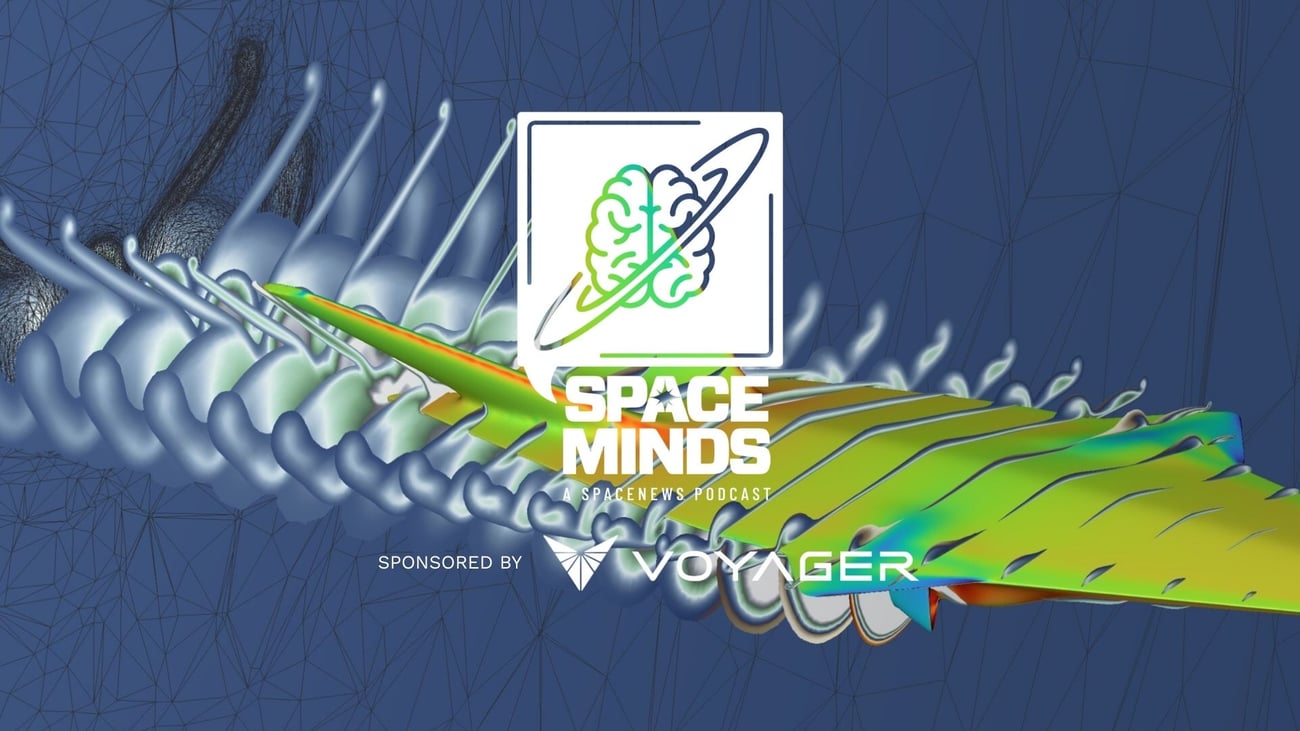 | | How physics AI is transforming the future of space engineering: On this episode of Space Minds, host David Ariosto speaks with Juan Alonso — CTO and co-founder of Luminary Cloud and professor at Stanford University — about the rapid transformation underway in aerospace engineering. Alonso breaks down how advances in computational fluid dynamics and Physics AI are enabling designers to simulate complex aerodynamic behavior in seconds, dramatically accelerating how rockets, aircraft and hypersonic systems are conceived and tested. Watch and listen to this episode. | | | | | | Things Can Always be Worse
| "Last year was really brutal. Every time I had a bad day or bad week or bad month, I'd go out and look at the moon and remind myself, 'Thank God it's still there.'"
| | – Noah Petro, NASA project scientist for the Artemis 3 mission, speaking at a meeting Tuesday of the Lunar Exploration Analysis Group.
| | | | | | |









No comments:
Post a Comment