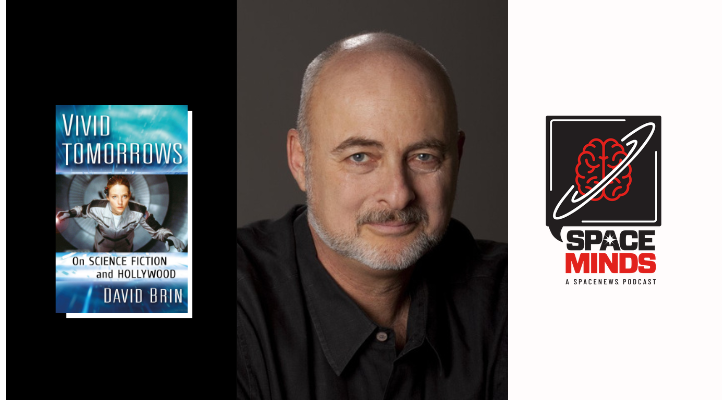
And David Brin has opinions
| David Brin has opinions, and he's quite willing to share them. On Artemis, not a fan, on Yoda, evil 😈, and don't get him started on Helium 3 🌖.
During the summer we're trying some different formats for our Space Minds podcast. But fret not, we'll still be doing some great insightful shows from events like the Ascend Conference, Small Satellite etc. But we'll mix in a few other pods and see what you think. You can send your feedback to spaceminds@spacenews.com.
If you're interested in sponsoring webinars or Space Minds, including at the World Space Business Week, don't hesitate to reach out to the sales team.
| | | | | | | UPCOMING
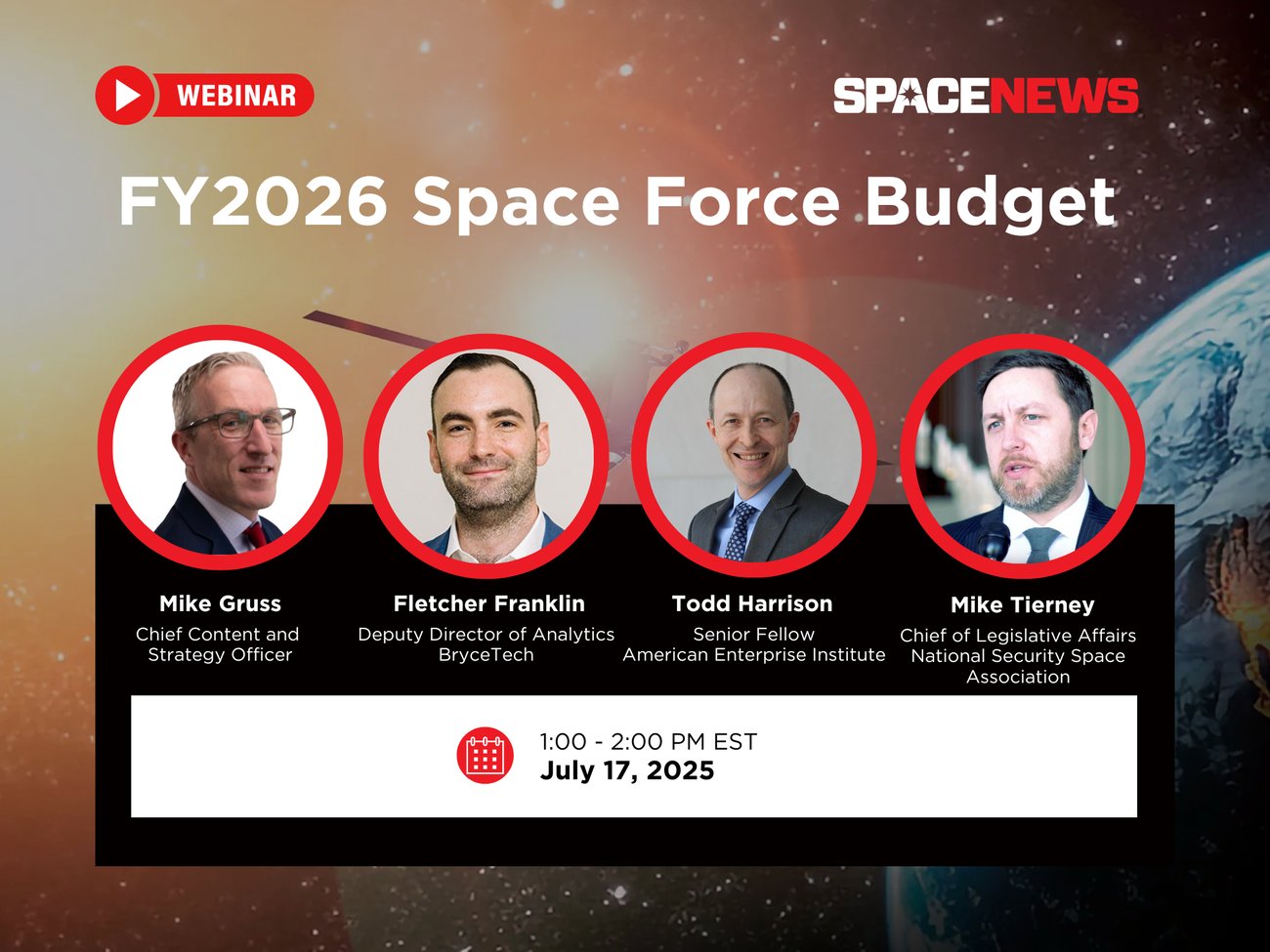
| FY2026 Space Force Budget
Parsing the Space Force's budget each year is a difficult task.
The FY2026 budget is more complicated and more difficult to grasp due in part to the reconciliation process lawmakers used as a way to pass President Trump's so-called "Big Beautiful Bill."
One part is clear: the Space Force could end up with its largest budget to date in its short history.
But there's much to be decided.
In this webinar, we will discuss the fiscal year 2026 budget, what it means for the Space Force, how it speaks to the Trump administration's priorities for the service, what it means for Golden Dome and how to understand the funding proposals for space programs.
| | REGISTER | | | | | | | SPACE MINDS PODCAST
| What if science fiction is our best glimpse of the future?
In this week's episode of Space Minds, award-winning science fiction author and physicist David Brin joins host David Ariosto for a wide-ranging conversation on the future of space, science, and humanity.
From self-replicating probes and quantum sensing to moving Earth's orbit and the true role of science fiction, Brin offers bold ideas grounded in decades of speculative thought and hard science. He challenges conventional wisdom on the Artemis program, discusses the risks and promises of artificial intelligence, and even makes the case for Yoda as history's most evil character. Strap in — this is not your average sci-fi chat.
On self-replicating probes:
"Well, if you're going to make one, you might as well make 20. So you have this wave of self-replicating probes that move outward. If you send 20 from Earth, and 10 of them work well, then you have 10 sites that are sending out 20 each. The calculations are, that if you do it with some baseline assumptions, you could fill the galaxy with human made, self replicating probes within 20 million years. And that's an eye blink, right?"
| | | | | | | | | | | 🚀 🕑 🎧 Don't miss SpaceNews' FirstUp Audio
Our morning round-up of the day's most important space headlines, curated by veteran journalist Jeff Foust and delivered in less than 10 minutes every Monday-Friday. Listen on our website, YouTube, Apple Podcasts, Spotify or your favorite podcast app. Prefer to get FirstUp in your inbox? Sign up here.
| | | | | | Sign up for our other newsletters -
First Up: The latest civil, commercial and military space news, curated by veteran journalist Jeff Foust. Delivered Monday to Friday mornings. -
Military Space: Veteran defense journalist Sandra Erwin delivers news and insights for the military space professional. Delivered Tuesday. -
China Report: Analysis of China's space activities and what it means as one of the United States' top competitors from correspondent Andrew Jones. Delivered every other Wednesday. -
SpaceNext AI: Exploring the intersection of space and artificial intelligence. Delivered Thursday. -
SpaceNews This Week: A round-up of the week's top stories, including our conference coverage. Delivered Friday. -
Marketing Minute: Covering PR, marketing, and advertising trends, upcoming SpaceNews opportunities, and editorial insights for communications and marketing leaders. Delivered monthly. | | | | | | |












No comments:
Post a Comment