05/02/2025 | Welcome to our roundup of top SpaceNews stories, delivered every Friday! This week, Lockheed Martin delivered Orion to NASA, Isaacman's NASA administrator nomination moved forward, the first Kuiper satellites reached orbit and more. | Our Top Story | | |
|
|
|
| |  | By Jeff Foust, May 2, 2025
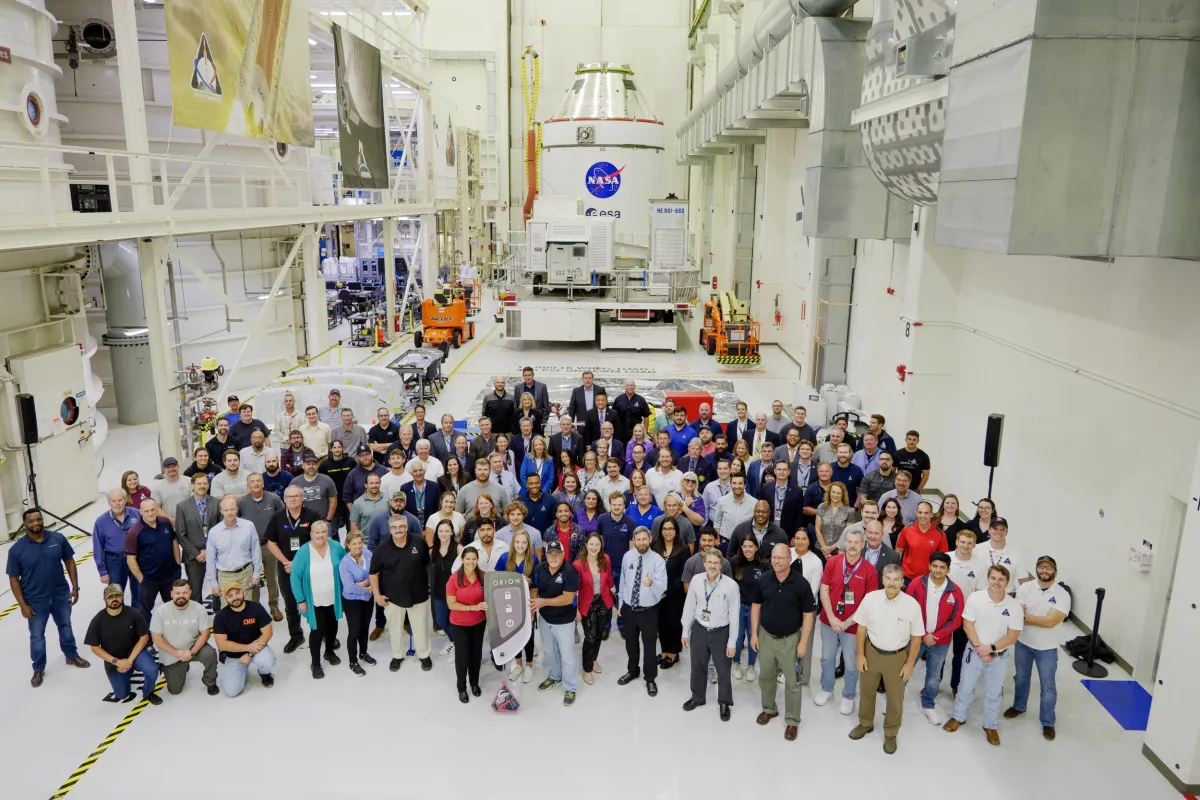
| Lockheed Martin formally delivered to NASA May 1 the Orion spacecraft for Artemis 2, keeping that mission on track for a launch in early 2026.
NASA took acceptance of the Orion spacecraft at the Kennedy Space Center, signing paperwork marking completion of Lockheed's work to assemble the spacecraft. The spacecraft is now the responsibility of the Exploration Ground Systems (EGS) program.
EGS will now take Orion to processing facilities at the center to load consumables such as propellant, water and oxygen, followed by installation of its launch abort system. Orion will then go to the Vehicle Assembly Building to be integrated with the Space Launch System rocket currently being assembled there. Read More |  | Other News From the Week | POLICY & POLITICS | Senate Commerce Committee advances Isaacman nomination to lead NASA The Senate Commerce Committee voted 19 to 9 to advance Jared Isaacman's nomination to be NASA administrator to the full Senate on April 30, bringing him one step from confirmation. The vote happened three weeks after he testified before the committee, and allows the nomination to now go to the full Senate for a confirmation vote, yet to be scheduled. Read More
FCC opens new battlefront in satellite power struggle The Federal Communications Commission unanimously voted April 28 to review its satellite spectrum sharing rules, opening a new front in the power struggle between legacy operators in geosynchronous orbit (GSO) and non-GSO (NGSO) upstarts. The agency adopted a Notice of Proposed Rulemaking to explore updating Equivalent Power Flux Density limits, set up more than 30 years ago to regulate how strong NGSO signals can be to avoid disrupting GSO satellites flying overhead. Read More
China and Malaysia to study international equatorial spaceport project China is exploring establishing its first overseas launch site with a proposed equatorial spaceport in Malaysia, carrying strategic, economic, and geopolitical implications. The China Great Wall Industry Corporation signed a letter of intent with Pahang State Development Corporation and Lestari Angkasa Sdn Bhd, a Malaysian private company actively involved in the development of the country's space sector, April 15. Read More | | | Loving SpaceNews This Week? Check out SpaceNext: AI, where we look at how artificial intelligence is becoming integral to the space industry, and how companies and agencies are using it for their missions. | | | MILITARY | Ursa Major wins $28.5 million Air Force contract to flight-test Draper engine for hypersonic use
The contract, announced May 1, covers both the first flight demonstration and integration of the Draper engine, a storable, high-performance propulsion system tailored for hypersonic missile applications, into a test vehicle, with work scheduled through early 2027. The project aims to advance U.S. capabilities in hypersonic weapons, a category of defense systems that has become a top Pentagon priority amid competition with China and Russia. Read More
U.S. Space Force taps 12 firms for $237 million small-satellite procurement
The U.S. Space Force has selected 12 companies for a 10-year, $237 million contract to develop and deploy small satellites under a new procurement initiative aimed at advancing military space technology through commercial innovation. The agreement, known as the Space Test Experiments Platform 2.0, is part of the Department of Defense's broader Space Test Program. Read More | | | LAUNCH | Alpha launch of Lockheed tech demo satellite fails
A Firefly Alpha rocket malfunctioned during an April 29 launch, preventing a Lockheed Martin technology demonstration satellite on board from reaching orbit. The launch of the FLTA0006 mission appeared to go as planned until stage separation about 2 minutes and 35 seconds after liftoff. A cloud suddenly formed between the two stages, and video showed what appeared to be debris falling away as the upper stage continued its ascent. Read More
Atlas launches first operational Project Kuiper satellites
An Atlas 5 successfully launched April 28 the long-delayed first set of operational Project Kuiper broadband satellites for Amazon. United Launch Alliance reported a little more than 90 minutes later that the 27 Kuiper satellites on board had deployed from the Centaur upper stage into low Earth orbit. Read More | | |
|  | OPINION |
|  | By Mark Sasson, May 2, 2025
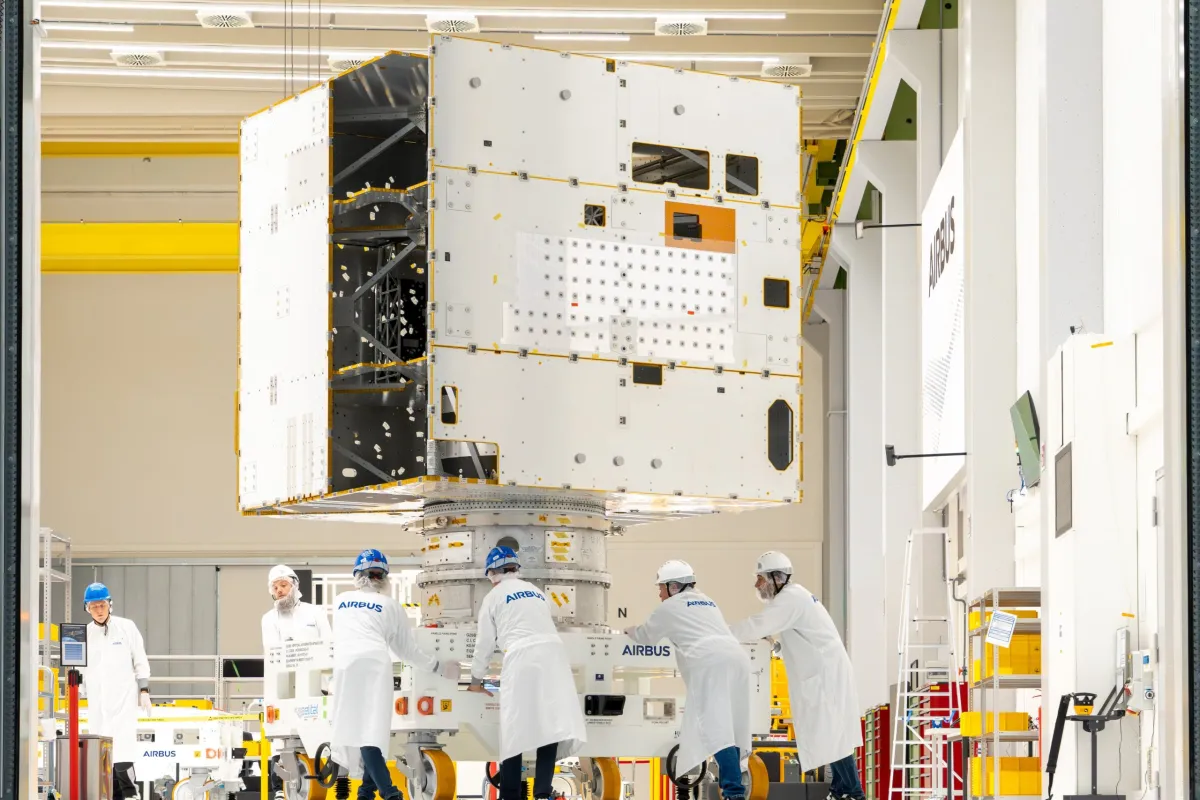
| The space industry is entering a new era. No longer defined solely by national agencies and defense contractors, it now includes a fast-growing field of private innovators, venture-backed startups and visionary founders. In 2024 alone, startups in the sector brought in $8.6 billion in funding — a clear sign that investors are putting serious money behind commercial space companies and the people building them.
But there's a gap between potential and reality. Without a steady pipeline of talent, even the most well-funded or well-engineered ideas risk stalling. Building the next generation of the space workforce is now mission-critical. Read More
Expanding the human presence in orbit faces growing risk from space debris By Siamak Hesar
If European leaders want to beef up defense in space, they should look to the Space Development Agency By Jean-Francois Morizur and François Alter
Data architecture is paramount for Golden Dome success — and the Department of Defense is not ready
By Rob Goron and Damon Feltman
| SpaceNews is committed to publishing our community's diverse perspectives. Whether you're an academic, executive, engineer or even just a concerned citizen of the cosmos, send your arguments and viewpoints to opinion@spacenews.com to be considered for publication online or in our next magazine. The perspectives shared in these op-eds are solely those of the authors. | | |  | Publish your press release with SpaceNews' premier press release service and start seeing results today.
| Latest Press Releases |
|
|
|
Sponsored Post | 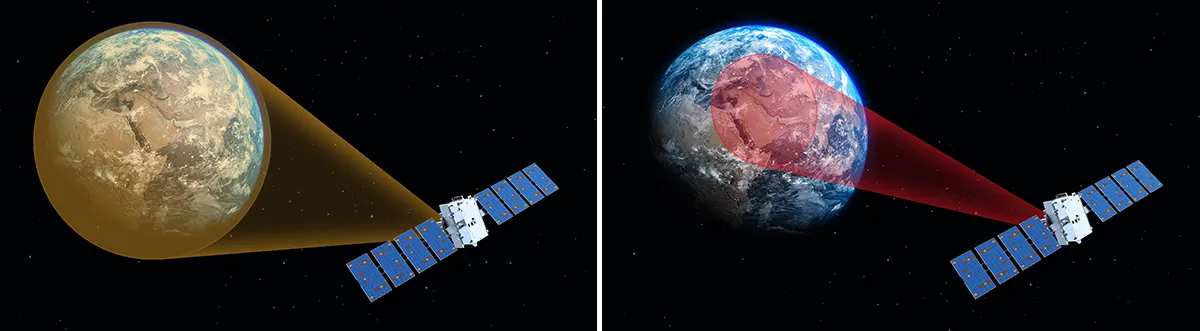 | By L3Harris
GPS is not only a cornerstone to our military superiority, it is foundational to our national and global economic stability. In fact, analysts warn that GPS outages could cost our economy $1 billion per day. Once the world's sole global navigation satellite system, GPS now competes with international alternatives. While the U.S. continues investing in GPS modernization, other nations have been more aggressive in adopting new technologies and expanding their satellite networks.
Recently, our adversaries have deployed sophisticated efforts to disrupt, deny and degrade U.S. Precision, Navigation and Timing (PNT) advantages. The conflict in Ukraine offers a sobering wake-up call where advanced electronic warfare capabilities have effectively degraded or denied GPS-guided weapons and unmanned vehicles. This isn't a theoretical threat – it's happening today, and if we want to dominate on the battlefield, we will need to have a PNT solution that is seamless and adaptive. Read More
| | |
|
| | | What's New With SpaceNews? | Don't forget to sign up for our next webinar! |  | Join us May 6 as we sit down with Novaspace to dig into their in-depth analysis of SpaceX's financial health, strategic evolution and key business segments. |
|
| | |
|
|


No comments:
Post a Comment