Satellite servicing firms make case for government backing
Companies that perform in-orbit satellite services are still waiting for Washington to put money behind the rhetoric on space logistics. At last week's Satellite 2026 conference, executives made the case that, even with private investment, without significant government funding, the U.S. risks falling behind in orbital logistics.
They pointed to a recent speech by Gen. Stephen Whiting, head of U.S. Space Command, who outlined an ambitious architecture for orbital refueling, servicing and mobility. However, said executives said, the absence of dedicated budget authority is stalling the buildout of a logistics infrastructure that would support services like refueling, repairs and debris removal.
'We're ready' but procurement isn't
Robert Hauge, president of Northrop Grumman's SpaceLogistics, said industry has already moved ahead, on its own dime.
"We have developed two mission extension vehicles, three mission extension pods, a mission robotic vehicle, all on our internal funds, because Northrop Grumman had the vision to see this as a future market that has commercial value, but also value to the military," Hague said. "So we brought the capability to bear, and we're ready to respond to the government's needs. But, really, what it comes down to at this point is for the government in turn, to say 'we're ready to procure those capabilities.'"
What servicing vehicles actually do
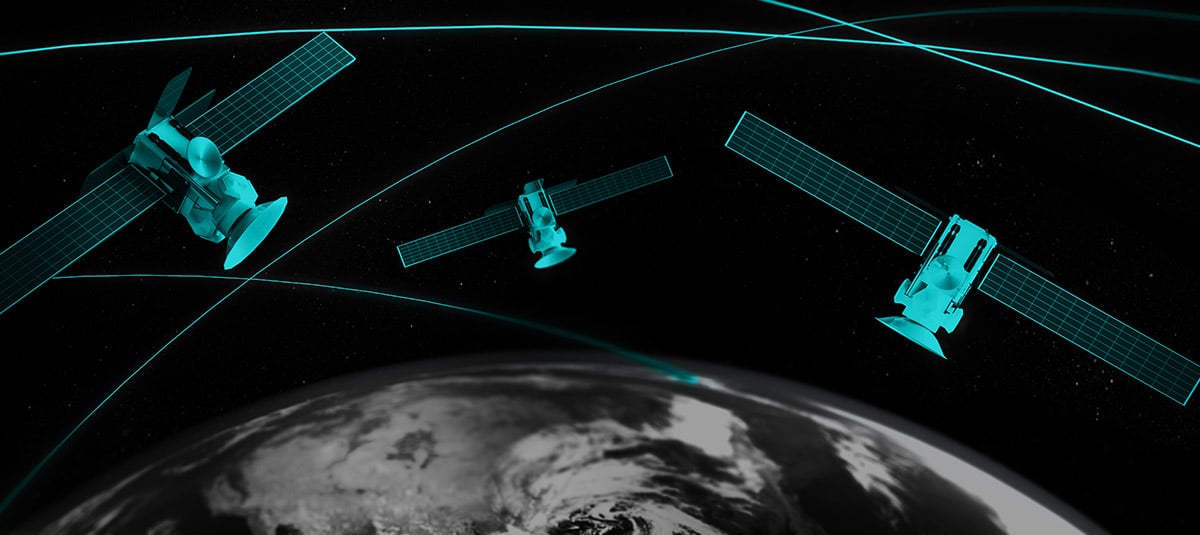
Satellite servicing vehicles are spacecraft designed to rendezvous with, dock and physically interact with other satellites already in orbit — extending their lives, moving them or even updating their hardware. They are equipped with arms, sensors and software that allow them to perform delicate operations hundreds or thousands of miles above Earth.
The technology hinges on rendezvous and proximity operations (RPO), or precision maneuvers that allow one spacecraft to safely approach and attach to another.
SpaceLogistics' servicing vehicles were designed to service geostationary satellites, which are high-value assets and operators can justify the cost of servicing if the life of a satellite can be extended for several years. In low Earth orbit, the economics are different because satellites are less costly, easier to deploy and are viewed as disposable assets. However, the congestion in LEO is expected to drive a demand for removal services.
The physics reinforce that divide
In GEO, satellites operate in a near-zero inclination plane, allowing servicing vehicles to move between targets with relatively low fuel use. In LEO, satellites are spread across multiple orbital planes. Changing inclination is fuel-intensive, making cross-plane servicing costly and often impractical — one reason companies have focused on GEO first.
Still, Hauge said that could shift with government demand, particularly for debris removal: "I think the most promising capabilities for low Earth orbit are going to be more on the deorbit side."
There are signs of movement. The Space Development Agency recently awarded a contract to Starfish Space for satellite deorbiting, suggesting the Pentagon could emerge as a key customer.
"At the end of the day, we have the technology to be able to do it," said Hauge. "We just need that program of record to say, 'we actually want to fund that going forward.'"
Clare Martin, executive vice president of Astroscale U.S. echoed that point, citing demand signals like Space Systems Command's request for information on refueling architectures.
"But what we're not really seeing yet is a budgetary commitment," Martin said. "We're not seeing that budget line for sustainment, in order to move from one offs where we are now into a truly operational infrastructure. That's the piece that is missing."
China factor raises stakes
Lawmakers are increasingly tying the issue to strategic competition.
During a March 26 Senate Armed Services Committee hearing, Sen. Mark Kelly (D-Ariz.) pointed to China's on-orbit refueling demonstrations as a potential inflection point, warning it could enable sustained maneuver and new operational concepts in space.
Whiting agreed the U.S. is watching closely, and suggested logistics could reshape military space operations.
"My belief is that we need to deliver our own maneuver warfare capability in space as we have in other domains," he said.
|