Saturday, November 29, 2025

Opinions: Is space-based missile defense a non-starter?

Plus: Making commercial satellites more accessible for military needs
 ‌ ‌ ‌ ‌ ‌ ‌ ‌ ‌ ‌ ‌ ‌ ‌ ‌ ‌ ‌ ‌ ‌ ‌ ‌ ‌ ‌ ‌ ‌ ‌ ‌ ‌ ‌ ‌ ‌ ‌ ‌ ‌ ‌ ‌ ‌ ‌ ‌ ‌ ‌ ‌ ‌ ‌ ‌ ‌ ‌ ‌ ‌ ‌ ‌ ‌ ‌ ‌ ‌ ‌ ‌ ‌ ‌ ‌ ‌ ‌ ‌ ‌ ‌ ‌ ‌ ‌ ‌ ‌ ‌ ‌ ‌ ‌ ‌ ‌ ‌ ‌ ‌ ‌ ‌ ‌ ‌ ‌ ‌ ‌ ‌ ‌ ‌ ‌ ‌ ‌ ‌ ‌ ‌ ‌ ‌ ‌ ‌ ‌ ‌ ‌ ‌ ‌ ‌ ‌ ‌ ‌ ‌ ‌ ‌ ‌ ‌ ‌ ‌ ‌ ‌ ‌ ‌ ‌ ‌ ‌ ‌ ‌ ‌ ‌ ‌ ‌

11/29/2025

READ IN BROWSER

SpaceNews logo
Space News Opinions newsletter logo

Save 50% on unlimited access: Through Sunday, get half off any new SpaceNews subscription. Use code SAVE50 at checkout. Get access now.

By Dan Robitzski


Welcome back to our weekly newsletter highlighting the opinions and perspectives of the SpaceNews community.


Star Wars redux: the false promise of space-based missile defense


In the months since the Trump administration first announced the Golden Dome missile defense initiative, commercial space firms have been all in on finding ways to contribute. Details are still scarce (though the Pentagon is already contracting for space-based interceptor prototypes), but the space industry has more or less treated the Golden Dome as a matter of when, not if.


But writing this week in our opinions section is Najam Ul Hassan, a research assistant at the Centre for Aerospace and Security Studies in Lahore, Pakistan, who argued that there's a reason space-based interceptors never took off in the past and that "the fundamental hurdle — physics, not technology — remains to be effectively overcome." He argued that the absenteeism problem — the fact that a given spacecraft housing interceptors cannot stay "parked" over a point of interest — makes the economics and logistics of launching an effective boost phase defense far too complicated to be worth overcoming.


As Hassan put it, the emphasis on "space-based interceptors thus reflects a recurring faith in technological solutions to strategic problems that are, at their core, governed by physics and deterrence. Rather than investing in an orbit-based missile shield that risks instability and imposes exorbitant costs, pursuing balanced security arrangements may offer a sustainable path toward long-term stability."


Read the full opinion here.

An illustration of the Golden Dome. Credit: Arcfield

An illustration of the Golden Dome. Credit: Arcfield

Making COMSATCOM accessible for large-scale defense requirements 


Let's stick with the Golden Dome theme. Charles "Chuck" Cynamon, president of Telesat Government Solutions, made his case for how to make Golden Dome — and other military space programs that will depend on the commercial industry — more feasible.


He argued that the Pentagon has neither the time nor the money to build everything it needs from scratch — as evidenced by the military's growing emphasis on buying first and building only when need be — and said that a new approach to procurement can solve the Pentagon's headache when it comes to adopting commercial technology.


Cynamon argued that the Pentagon should embrace a "a contractual model known as indefeasible rights of use. This long-term lease model, which required Congressional approval, has been used by the Defense Information Systems Agency since the early 2000s to acquire terrestrial fiber optic telecommunications capacity without having to own the fiber itself. The same model could also be applied to the acquisition of commercial network bandwidth from space."


Read the full argument here.


SpaceNews is committed to publishing our community's diverse perspectives. Whether you're an academic, executive, engineer or even just a concerned citizen of the cosmos, send your arguments and viewpoints to opinion@spacenews.com to be considered for publication online or in our next magazine. The perspectives shared in these opinion articles are solely those of the authors.

FROM SPACENEWS

Watch or listen to the latest episode of Space Minds

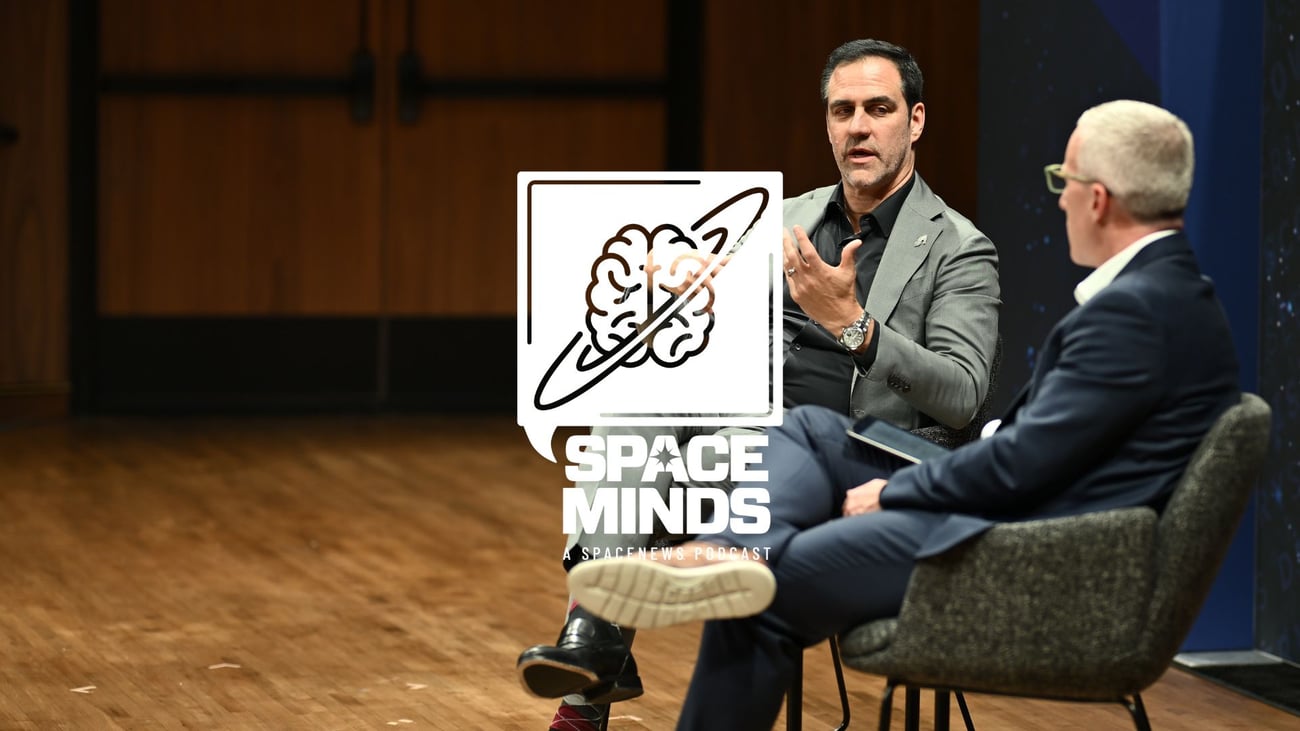
Reimagining space stations for the commercial ageOn this episode of Space Minds, tune in to host Mike Gruss' fireside chat with Starlab Space CEO Marshall Smith. Their conversation explores how today's commercial space pioneers are turning concepts once rooted in science fiction into operational reality. Smith reflects on his path from NASA engineer to leading the development of a next-generation commercial space station—one designed for science, manufacturing, and a future where private industry drives a sustainable economy in low Earth orbit. Watch or listen now.

Subscribe to SpaceNews


Friday, November 28, 2025

Top Stories: ESA secures higher budget at the ministerial

Plus: A Starship booster test results in significant damage
 ‌ ‌ ‌ ‌ ‌ ‌ ‌ ‌ ‌ ‌ ‌ ‌ ‌ ‌ ‌ ‌ ‌ ‌ ‌ ‌ ‌ ‌ ‌ ‌ ‌ ‌ ‌ ‌ ‌ ‌ ‌ ‌ ‌ ‌ ‌ ‌ ‌ ‌ ‌ ‌ ‌ ‌ ‌ ‌ ‌ ‌ ‌ ‌ ‌ ‌ ‌ ‌ ‌ ‌ ‌ ‌ ‌ ‌ ‌ ‌ ‌ ‌ ‌ ‌ ‌ ‌ ‌ ‌ ‌ ‌ ‌ ‌ ‌ ‌ ‌ ‌ ‌ ‌ ‌ ‌ ‌ ‌ ‌ ‌ ‌ ‌ ‌ ‌ ‌ ‌ ‌ ‌ ‌ ‌ ‌ ‌ ‌ ‌ ‌ ‌ ‌ ‌ ‌ ‌ ‌ ‌ ‌ ‌ ‌ ‌ ‌ ‌ ‌ ‌ ‌ ‌ ‌ ‌ ‌ ‌ ‌ ‌ ‌ ‌ ‌ ‌

11/28/2025

READ IN BROWSER

Space News This Week newsletter logo

Save 50% on unlimited access: Through Sunday, get half off any new SpaceNews subscription. Use code SAVE50 at checkout. Get access now.

SPONSORED BY

Lockheed Martin logo

Welcome to our roundup of top SpaceNews stories, delivered every Friday! This week, ESA secured its three-year budget, a Starship booster was damaged during a test, China prepares for an orbital launch with a commercial rocket and more.


If someone forwarded you this edition, sign up to receive it directly in your inbox every Friday.


SA Director General Josef Aschbacher presents the outcome of the 2025 ministerial conference Nov. 27 in Bremen, Germany. Credit: ESA/Ph. Servent

SA Director General Josef Aschbacher presents the outcome of the 2025 ministerial conference Nov. 27 in Bremen, Germany. Credit: ESA/Ph. Servent

OUR TOP STORY


ESA raises more than 22 billion euros at ministerial

By Jeff Foust

Member states of the European Space Agency are contributing more than 22 billion euros for the next three years, very close to its overall goal.


At a press conference Nov. 27 at the conclusion of the two-day ministerial conference, ESA Director General Josef Aschbacher announced that ESA member states had agreed to provide 22.067 billion euros ($25.58 billion) for the agency's programs. That was very close to the agency's proposal of 22.254 billion euros.


The funding was a 32% increase from the 16.9 billion euros ESA received at the previous ministerial in 2022.


MORE NEWS FROM EUROPE


Europe's Human and Robotic Exploration hit by budget shortfall

The European Space Agency's Human and Robotic Exploration program fell short of its budget request at the ministerial, with member nations agreeing to contribute 2.98 billion euros ($3.08 billion), accounting for roughly 70% of the 3.77 billion euro ask.


ESA and Norway announce plans for an Arctic Space Centre

The new Arctic Space Centre, announced on the sidelines of ESA's ministerial conference Nov. 27, is expected to focus on Earth observation, navigation and telecommunications, with a strong emphasis on using space-based data to support sustainable development in the Arctic region.


Diverging priorities shape opening day of ESA ministerial 2025

At the start of the ministerial, the European Space Agency's three major contributors – Germany, France and Italy –indicated they would heavily support the agency while hinting that their backing was driven by sharply different national priorities.


COMMERCIAL


First next-generation Starship booster damaged in testing

The first booster in the new generation of Starship vehicles suffered significant damage when the lower section of the booster appeared to burst during a Nov. 21 test, adding to doubts about the vehicle's development schedule.


Blue Origin advances Blue Ring spacecraft toward 2026 national security mission

Blue Origin said it has passed a key development milestone for its Blue Ring spacecraft, a maneuverable in-orbit transport vehicle designed for national security missions and backed by Pentagon funding.


China set for first orbital launch and landing attempt this weekend with commercial Zhuque-3 rocket

Chinese commercial launch firm Landspace is preparing to attempt the country's first orbital launch and booster landing this weekend with its Zhuque-3 rocket. The launch of Zhuque-3 will mark China's first attempt to recover a first stage following an orbital launch.

SPONSORED

Revolutionizing U.S. Homeland Missile Defense
From surface to space, Lockheed Martin is delivering combat-proven layered defense solutions so the U.S. and allies can stay ahead of accelerating threats. When it comes to safeguarding America, we're ready now.

LAUNCH


NASA to fly only cargo on next Starliner mission under modified contract

NASA has revised its commercial crew contract with Boeing, reducing the number of CST-100 Starliner missions to four, the first of which will carry only cargo. The original contract included six operational missions after NASA certified the vehicle to carry astronauts.


Shenzhou-22 docks at Tiangong space station, resolving human spaceflight emergency

China's uncrewed Shenzhou-22 spacecraft has arrived at the Tiangong space station, reestablishing a lifeboat for the crew and ending the orbital outpost's first operational emergency.


Soyuz transports new crew to ISS

A Soyuz spacecraft delivered two Russian cosmonauts and one American astronaut to the International Space Station Nov. 27 for an eight-month stay. On board the Soyuz were commander Sergey Kud-Sverchkov and fellow Roscosmos cosmonaut Sergey Mikaev, along with NASA astronaut Chris Williams.

Stellar Dispatch: SpaceNews' press release service

Latest Press Releases


FROM SPACENEWS

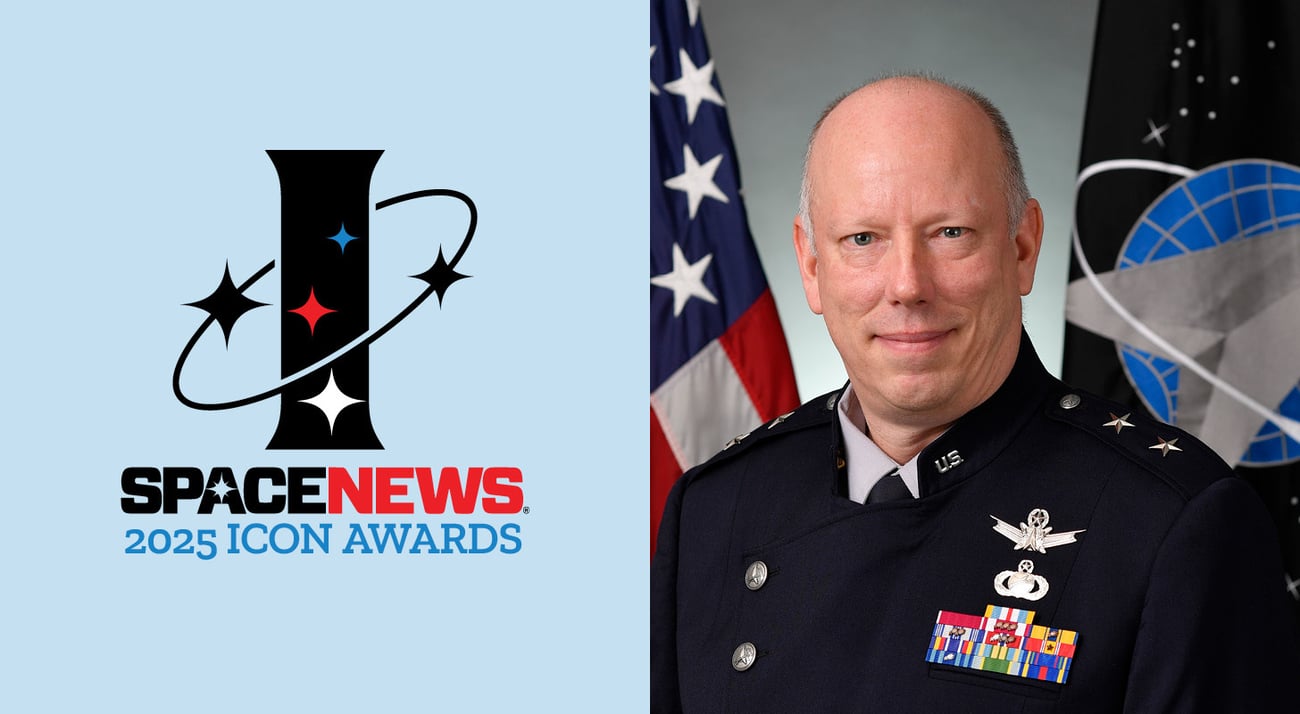
U.S. Space Force Maj. Gen. Stephen Purdy will headline this year's Icon Awards on Dec. 2

Last chance to register! U.S. Space Force Maj. Gen. Stephen Purdy will headline this year's Icon Awards program on Tuesday in Washington D.C. with a keynote speech that is expected to touch on the future of space acquisition, innovation and collaboration. Purdy serves as the Acting Assistant Secretary of the Air Force for Space Acquisition and Integration. Other speakers and attendees include leaders from NASA and the Department of State's Office of Space Affairs as well as executives and innovators from across the industry. Registration ends Dec. 1 – reserve your seat now.

Subscribe to SpaceNews


Top Stories: Isaacman stresses crewed moon mission

Plus: China concludes GEO refueling test  ‌ ‌ ‌ ‌ ‌ ‌ ‌ ‌ ‌ ‌ ‌ ‌ ‌ ‌ ‌ ‌ ‌ ‌ ‌ ‌ ‌ ‌ ‌ ‌ ‌ ‌ ‌ ‌ ...