| By Jeff Foust
In today's edition: three's company for Ariane 6 and Vulcan, AST SpaceMobile outlines satellite deployment plans, a glimpse at Golden Dome and more.
If someone forwarded you this edition, sign up to receive it in your inbox every weekday. Have thoughts or feedback? You can hit reply to let me know.
| | | | | | Top Stories
United Launch Alliance successfully performed its first national security Vulcan launch. The Vulcan Centaur lifted off from Cape Canaveral at 8:56 p.m. Eastern Tuesday, near the end of a one-hour launch window. About eight hours after liftoff, Space Systems Command confirmed the USSF-106 launch was successful. The primary payload for USSF-106 is the Navigation Technology Satellite-3 (NTS-3), a $250 million experimental spacecraft developed by L3Harris for the Air Force Research Laboratory to test advanced positioning, navigation and timing technologies from geostationary orbit. This was the third launch of Vulcan after two certification launches last year. [SpaceNews]
Minutes earlier, Ariane 6 lifted off on its third flight. The European rocket launched from French Guiana at 8:37 p.m. Eastern. It deployed the MetOp-SG-A1 weather satellite into polar orbit about 65 minutes later. The satellite is the first in a second generation of polar-orbiting weather satellites for the European weather satellite agency Eumetsat. The satellite also carries a hosted payload, Sentinel-5, for the ESA/EU Copernicus program that will measure atmospheric trace gases and aerosols. This launch followed Ariane 6 missions last July and in March, with plans for three more Ariane 6 launches before the end of the year. [SpaceNews]
AST SpaceMobile says it has all the funding in hand for satellites needed to provide direct-to-device services in the United States and other key markets. The company said in earnings released this week it had the funds needed for a constellation of 45 to 60 satellites needed for continuous coverage. The company has five Block 1 satellites in orbit and will ship the first larger Block 2 satellite to India this month for an upcoming launch on a GSLV rocket. AST SpaceMobile anticipates at least four additional orbital launches by March 31, as part of plans to deploy spacecraft every 45–60 days on average to reach up to 60 satellites by the end of 2026. [SpaceNews]
Rocket Lab has completed the acquisition of payload manufacturer Geost. The $275 million acquisition of Geost formally closed Tuesday after Rocket Lab announced the deal in May. Geost produces electro-optical and infrared (EO/IR) sensor payloads used in U.S. national security missions, including missile warning and tracking, space surveillance and tactical reconnaissance. Bringing EO/IR payload capabilities in-house gives Rocket Lab control over all major elements of a military satellite system, from launch vehicles and satellite buses to the sensors themselves. [SpaceNews]
NASA emphasized the use of smallsats to support its science missions despite uncertainty about science budgets. In a keynote address this week at the Small Satellite Conference, Nicky Fox, NASA associate administrator for science, said smallsats "allow us to fly more science at a lower cost and at a quicker pace." She spent much of her speech highlighting the use of smallsats in astrophysics, Earth science, heliophysics and planetary science. In an earlier conference session, though, she acknowledged a "very dynamic environment" that includes a budget proposal from the administration that seeks to cut NASA's science budget nearly in half. She vowed to be "open and transparent" about any changes to the agency's operations. [SpaceNews]
The Office of Space Commerce's space traffic coordination system is moving out its best-testing phase. Dmitry Poisik, program manager of the office's Traffic Coordination System for Space, or TraCSS, said at the Small Satellite Conference that the program was not adding any more organizations to serve as beta testers for TraCSS, instead moving those organizations to being "pilot users" that include going through the registration process TraCSS will have when it goes live in January. TraCSS is also proposing to develop a testing environment called MASTER that will allow the office to compare space situational awareness data and products from other companies and organizations, determining if they should be incorporated into the production version. TraCSS was targeted for cancellation in NOAA's 2026 budget request but both House and Senate appropriations bills restored at least partial funding. [SpaceNews]
A new deep-space radar site in Western Australia has demonstrated it can track objects in GEO. The facility is the first location in the Deep-Space Advanced Radar Capability (DARC) network, a U.S. Space Force-led program designed to improve monitoring of high-altitude satellites and debris. The Western Australia site, known as Site 1, is part of a planned three-radar network that will also include sites in the United Kingdom and continental United States. The network is part of the AUKUS alliance's defense technology cooperation that includes Australia, the U.K. and the U.S. [SpaceNews]
Golden Dome will reportedly primarily feature ground-based systems with a space-based segment. A closed-door briefing to industry last week outlined current plans for Golden Dome, including more Next-Generation Interceptors and Patriot missiles along with ground-based radars. The presentation said Golden Dome will also have a space-based layer with tracking satellites and potentially boost-phase interceptors. Space Force Gen. Michael Guetlein, head of the Golden Dome program, is working on an architecture for the system due next month. [Reuters]
| | | | SPONSORED | | | |  | | Take your mission from concept to cosmos with the Blue Canyon Technologies Saturn-400, now the largest offering in our line of spacecraft. Designed for high-agility missions, demanding power needs, cislunar applications and high delta-V configurations, the Saturn-400 features: -
Low-jitter, advanced spacecraft agility enabled by Blue Canyon's reaction wheel or control moment gyroscope technology -
Increased payload capacity -
Higher power and volume scaling -
Heritage design that reduces program risk. -
Flexible mission capability in dynamic environments.
The Saturn-400 is intentionally engineered with customizable features to meet your mission needs, supporting higher-impact missions with greater capability at still a fraction of traditional costs. Learn more.
| | | | | | Other News
A Long March 5B launched a set of broadband constellation satellites Wednesday. The rocket lifted off from the Wenchang Space Launch Site on the island of Hainan at 2:43 a.m. Eastern. The rocket carried a set of satellites for the Guowang broadband constellation, although the announcement of the launch did not disclose how many were on board. [Xinhua]
The unique trajectory developed for NASA's ESCAPADE Mars mission could be applied to other smallsat missions launching outside of typical launch windows. ESCAPADE is scheduled to launch later this year on the second flight of Blue Origin's New Glenn, even though the next Mars launch window does not open until late next year. The satellites will go into an orbit around the Earth-sun L2 Lagrange point, then fly by the Earth next year to go on to Mars. Similar trajectories could be used for other Mars smallsat missions provided they have sufficient propulsion for the Mars trajectory insertion burn. [SpaceNews]
Japanese water propulsion startup Pale Blue plans to collaborate with Mitsubishi Electric Corporation. An investment from Mitsubishi Electric's corporate venture capital fund helped bring Pale Blue's total equity raised to around 4.5 billion yen ($30 million) since its founding in 2020, allowing Pale Blue to strengthen production and quality control systems to meet rising demand for small satellite propulsion. Pale Blue said it is looking into collaborating with Mitsubishi Electric but did not go into details about those plans. [SpaceNews]
French propulsion startup ThrustMe will test a Hall Effect electric thruster using iodine fuel on a Reflex Aerospace satellite next year. The Marble Imaging satellite will test JPT150, a low-power iodine Hall thruster developed by ThrustMe. Iodine is a more challenging propellant for such thrusters but is far less expensive than xenon and does not require high-pressure tanks. ThrustMe says it has seen strong customer interest in JPT150 since announcing plans in July to perform an in-space demonstration. [SpaceNews]
The Aerospace Corporation is refining technology to enable cubesats to share data through optical links. To boost data rates at longer ranges, the Flashlight Laser Crosslink cubesats, roughly the size of compact toaster ovens and launched last year, align themselves. Small spacecraft capable of sharing extensive datasets quickly could synchronize imagery and data collection, mimicking remote-sensing capabilities of much larger satellites. [SpaceNews]
Mission Control Space Services is inviting organizations to test machine-learning models on a spacecraft launched in June. Mission Control's Persistence mission is housed in a six-unit Spire Global Lemur cubesat equipped with an optical-imaging payload. Fees to test models on Mission Control's Marsupial flight computer will range from the "low tens to low hundreds of thousands" of dollars, the company said. Along with customer models, Mission Control will test two of its own machine-learning algorithms. [SpaceNews]
Telespazio Germany will enhance its EASE-Rise mission management platform through partnerships with two other companies. Indian startup Digantara will provide space situational awareness services while Intella will offer AI tools. The partnerships will improve the space safety capabilities of EASE-Rise as well as spacecraft anomaly detection services. [SpaceNews]
Frank Strang, founder and former CEO of SaxaVord Spaceport in the Shetland Islands, has died. Strang died about a month after he announced he was stepping back from operations of the spaceport after receiving a diagnosis of terminal cancer. Strang, along with co-founders Scott Hammond and Debbie Strang, started work in 2017 to convert a former Royal Air Force facility into a spaceport. Several launch companies have announced plans to fly their rockets from SaxaVord, although none have yet attempted an orbital launch there. [Shetland News]
| | | | | | Learning the Right Lessons
| "The SIMPLEx program has a lot of lessons learned and I hope we learn the right ones."
| | – Richard French, vice president of business development and strategy for space systems at Rocket Lab, discussing during a session at the Small Satellite Conference how the experience from NASA's SIMPLEx program of planetary science smallsat missions might apply to the planned Commercial Mars Payload Services program.
| | | | | | | FROM SPACENEWS | 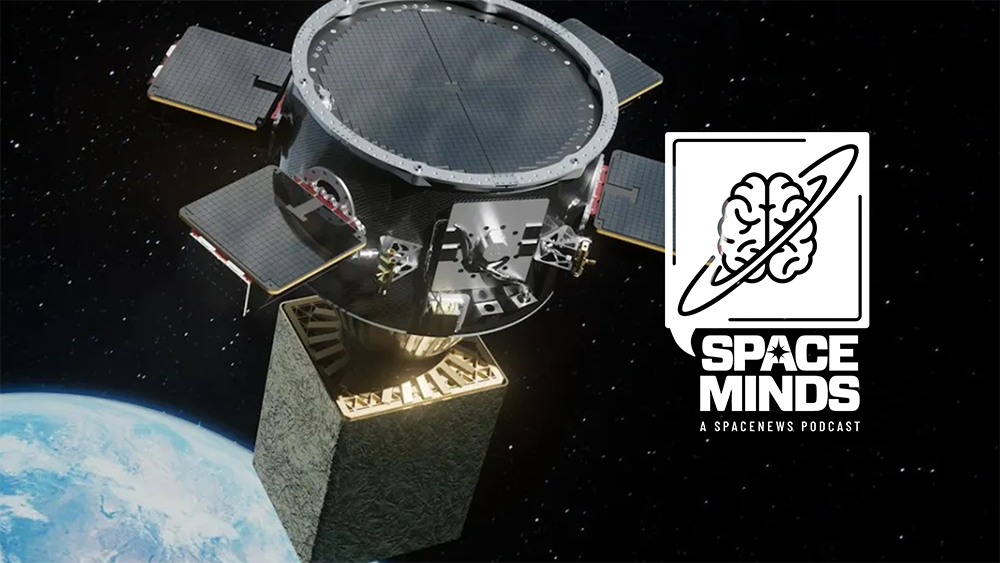 | | The evolution of multi-mission orbital vehicles: In this episode of Space Minds, catch SpaceNews' Jeff Foust panel discussion with Space Force and Firefly Aerospace leaders on what it takes to create agile, high-delta-V spacecraft capable of fulfilling multiple operational roles in orbit. Tune in for insights on the future of spacecraft modularity, propulsion innovations, and the real challenge: changing the mindset of space acquisition. | | | | | | | 🚀 🕑 🎧 Don't miss SpaceNews' FirstUp Audio
The day's most important space headlines delivered in less than 10 minutes every Monday-Friday. Listen on our website, YouTube, Apple Podcasts, Spotify or your favorite podcast app.
| | | | | | Sign up for our other newsletters -
Military Space: Veteran defense journalist Sandra Erwin delivers news and insights for the military space professional. Delivered Tuesday. -
China Report: Analysis of China's space activities and what it means as one of the United States' top competitors from correspondent Andrew Jones. Delivered every other Wednesday. -
SpaceNext AI: Exploring the intersection of space and artificial intelligence. Delivered Thursday.
-
SpaceNews This Week: A round-up of the week's top stories, including our conference coverage. Delivered Friday. -
Video & Audio: Upcoming live programs, scheduled guests, and recent Space Minds podcast episodes, webinars and other events. Delivered Friday. -
Marketing Minute: Covering PR, marketing, and advertising trends, upcoming SpaceNews opportunities, and editorial insights for communications and marketing leaders. Delivered monthly. | | | | |









No comments:
Post a Comment